
Alternatives comparison · 2026
7 Sintra AI alternatives for founders who need finished work
Sintra AI packages role-based AI employees around shared business context. These alternatives take different routes: shipped growth work, executive assistance, visual agent workflows, content production, app automation, lifecycle marketing, and governed brand content.
By Tin Computer · Published July 27, 2026 · Updated July 27, 2026
Free five-step scan · No card · See it run on your site
The best Sintra AI alternative depends on the work you want to hand off. Choose Tin Computer when a lean product team needs growth work diagnosed and shipped, Lindy for inbox and calendar assistance, Gumloop for visual multi-agent workflows, Blaze for content and social execution, Zapier for app-to-app automation, ActiveCampaign for lifecycle marketing, and Jasper for governed content production.
Sintra AI is not just another general chatbot. Its current product presents named AI employees for roles such as social media, SEO, sales, customer support, data analysis, and executive assistance. You give the system business context, connect tools, set rules and approval levels, and work with the relevant role. That makes the useful comparison an operating-model decision, not a prompt-quality contest. Review Sintra AI's current product page
This guide compares the vendors through their public product pages and Tin Computer's verified product map as of July 27, 2026. We did not run logged-in trials of every alternative, so we do not assign invented performance scores or claim first-hand results. Instead, the criteria are the job each product is designed to own, how much workflow design remains with the customer, what the system can produce, and where an accountable human still needs to approve or finish the work.
Quick choice
Keep Sintra AI if named, role-based helpers and shared business context are the experience you want. Choose an alternative only when your recurring bottleneck is more specific: shipping product growth, managing executive admin, building custom workflows, producing content, connecting apps, running lifecycle campaigns, or governing content across a team.
How they compare
| Decision | Sintra AI | Tin Computer | Lindy | Gumloop | Blaze |
|---|---|---|---|---|---|
| Primary operating model | Named AI employees by business role | Evidence-led growth work and reviewable delivery | AI executive assistant | Visual AI agents and workflows | Marketing content and channel execution |
| Starts from | Business profile, instructions, and connected tools | Site, repository, goals, tasks, and connected evidence | Inbox, calendar, meetings, and personal work style | A task, data source, trigger, or workflow canvas | Brand context and a marketing plan |
| Strongest fit | Small businesses wanting several role-based helpers | Founders with an unshipped cross-functional growth backlog | Professionals overloaded by email, meetings, and follow-ups | Teams that can define custom agent processes | Small businesses that need consistent multi-channel content |
| Customer setup burden | Select roles, supply context, connect tools, set approvals | Connect the work surface and review consequential actions | Connect email and calendar, then tune preferences | Design or adapt agents, steps, data, and safeguards | Define brand, channels, campaigns, and review cadence |
| Typical output | Role-based assistance and automations | Diagnosis, artifacts, tasks, and reviewable code changes | Drafted email, scheduling, briefs, notes, and reminders | Agent results and multi-app workflow actions | Content, scheduled posts, ads, and campaign assets |
| Human control | Rules and approval levels configured by the customer | Public, spend, customer, payment, and deployment actions are gated | Review drafts and important assistant actions | Define permissions, data paths, and exception handling | Review brand output and campaign decisions |
The five closest operating models are compared here. Zapier, ActiveCampaign, and Jasper appear below because they are stronger alternatives for narrower jobs.
Sintra AI may fit better than Tin Computer when the desired experience is a ready-made roster of named business helpers, each organized around a familiar role, and the team prefers to work through chat, reusable business context, and connected-tool automations. It can also be the simpler choice when the company wants broad assistance across social, sales, support, SEO, and admin but does not need a system to inspect a software repository, maintain a growth task docket, or deliver product and website changes as reviewable code.
What Sintra AI is designed to replace
Sintra AI frames the product as a team of AI employees rather than a blank automation builder. The role names make the first handoff legible: a user can start with social media, SEO, sales, business development, customer support, ecommerce, data, email, or executive assistance. Shared business context helps those roles work from the same company information, while tool connections and approval levels determine how they act.
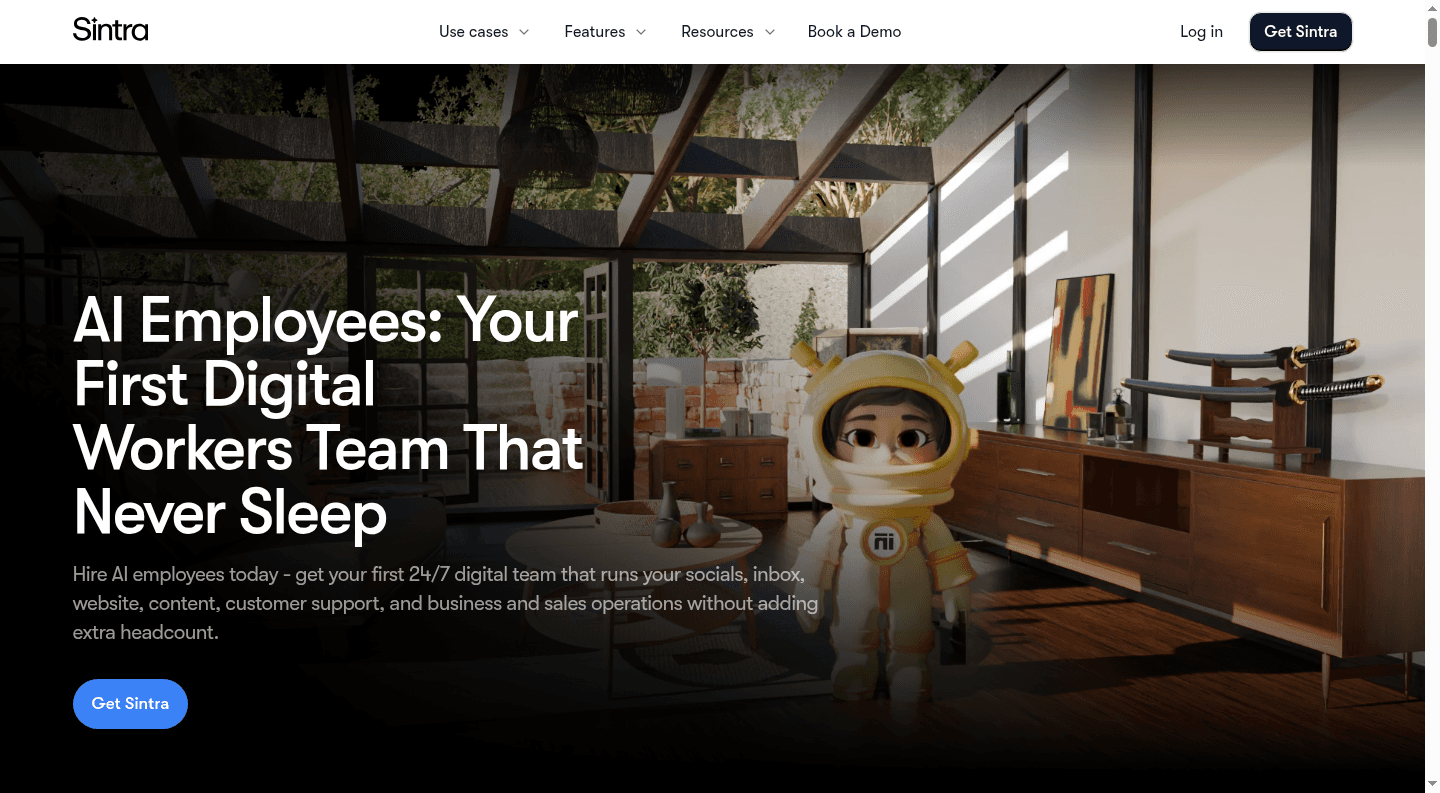
That is useful when a small business wants broad capacity without learning the vocabulary of agents, nodes, triggers, or data pipelines. It also explains why many supposed Sintra AI alternatives are not direct substitutes. A writing assistant can help one role but not coordinate several. An integration builder can connect tools but requires the customer to design the process. An executive assistant may handle personal admin extremely well while leaving marketing and product work untouched.
1. Tin Computer: best for diagnosing and shipping growth work
Tin Computer is the strongest alternative in this list when the missing role is not a collection of helpers but an owner for the growth backlog. It reads the product, public site, goals, task docket, repository, and connected evidence, then narrows that context into bounded work. The result might be a search page, pricing or funnel improvement, analytics repair, customer-support diagnosis, outreach draft, campaign plan, or a reviewable product change. See Tin Computer's growth-agent model
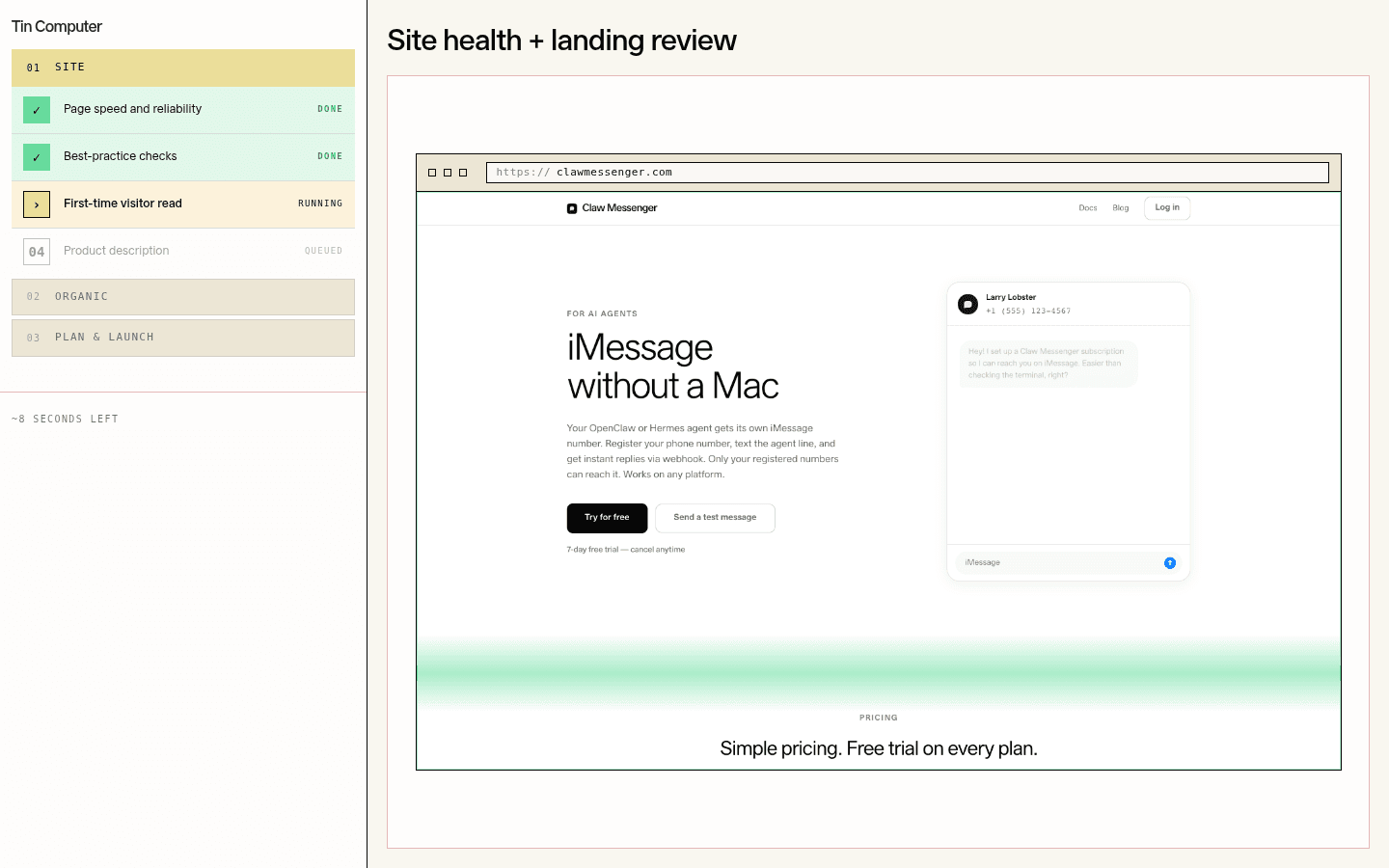
Choose Tin when a founder already has plenty of advice but not enough finished work. It is especially relevant for software products because the repository, deployed site, analytics, support signals, and current strategy can inform the same task. The trade-off is that Tin is not a general personal assistant or a plug-and-play roster for every department. It also preserves explicit gates: customer contact, public publishing, ad activation, spend, payments, secrets, and production deployment require accountable approval.
2. Lindy: best for executive admin, inbox, and calendar work
Lindy's current product is much more focused than a general AI workforce. It presents an AI executive assistant that organizes an inbox, drafts replies, schedules and reschedules meetings, prepares and records calls, tracks action items, and sends reminders. That makes Lindy a strong Sintra AI alternative when the main pain is personal administrative load rather than a cross-functional company backlog. Review Lindy's current assistant
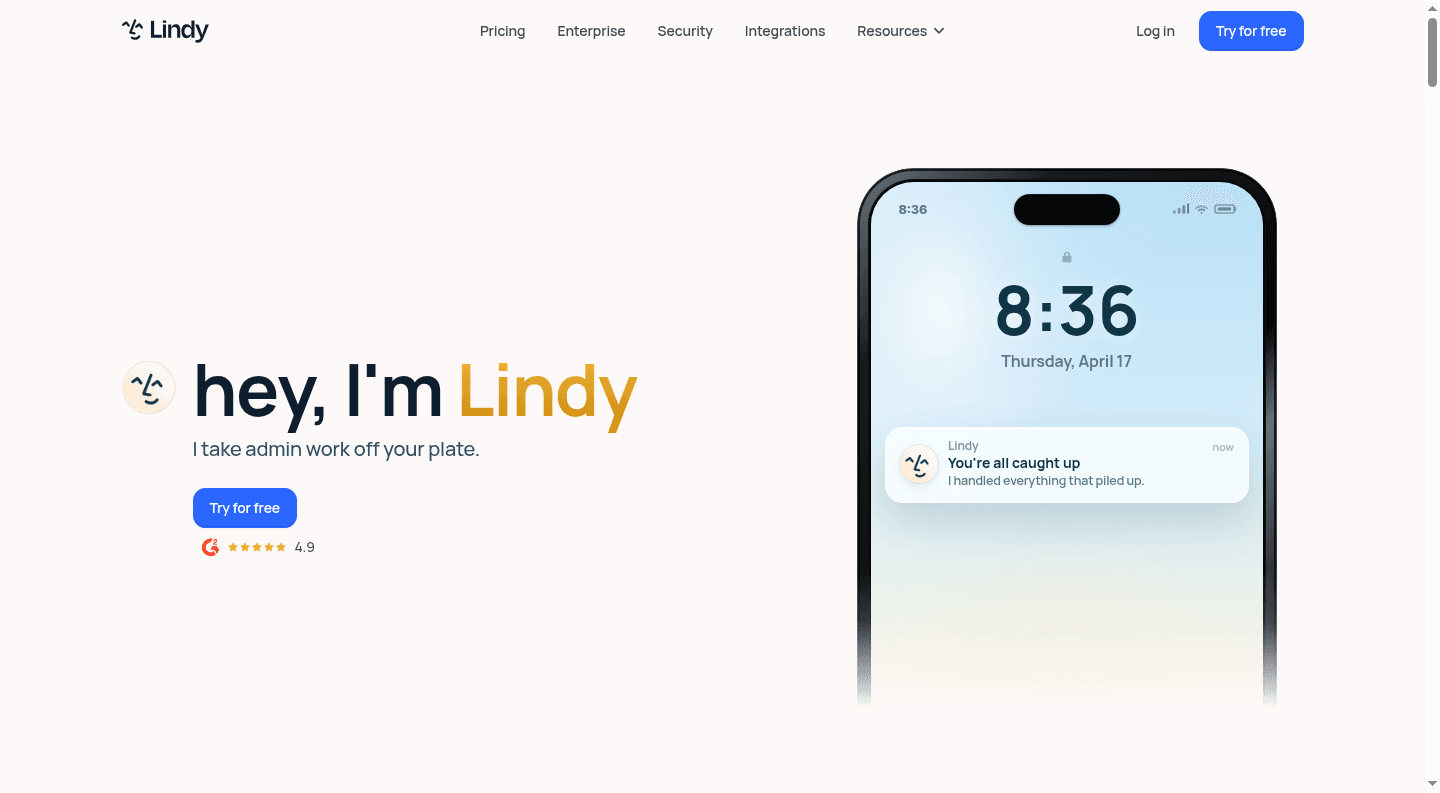
Choose Lindy when email triage, scheduling, meeting preparation, note taking, and follow-up consume the week. A focused assistant can be easier to evaluate than a broad suite because the before-and-after workflow is concrete. The boundary is also clear: Lindy is not primarily a growth strategy system, website implementation layer, lifecycle marketing platform, or general visual workflow builder.
3. Gumloop: best for custom AI agents and visual workflows
Gumloop is the strongest alternative here for teams that know the process they want and need a flexible agent platform to build it. Its current product emphasizes specialized agents, access to multiple models, connected internal and external data, recurring tasks, a multi-agent canvas, and workplace interaction through tools such as Slack, Teams, email, and WhatsApp. Its examples include data analysis, support, CRM, meeting preparation, call analysis, content, and SEO automation. Review Gumloop's current agent platform
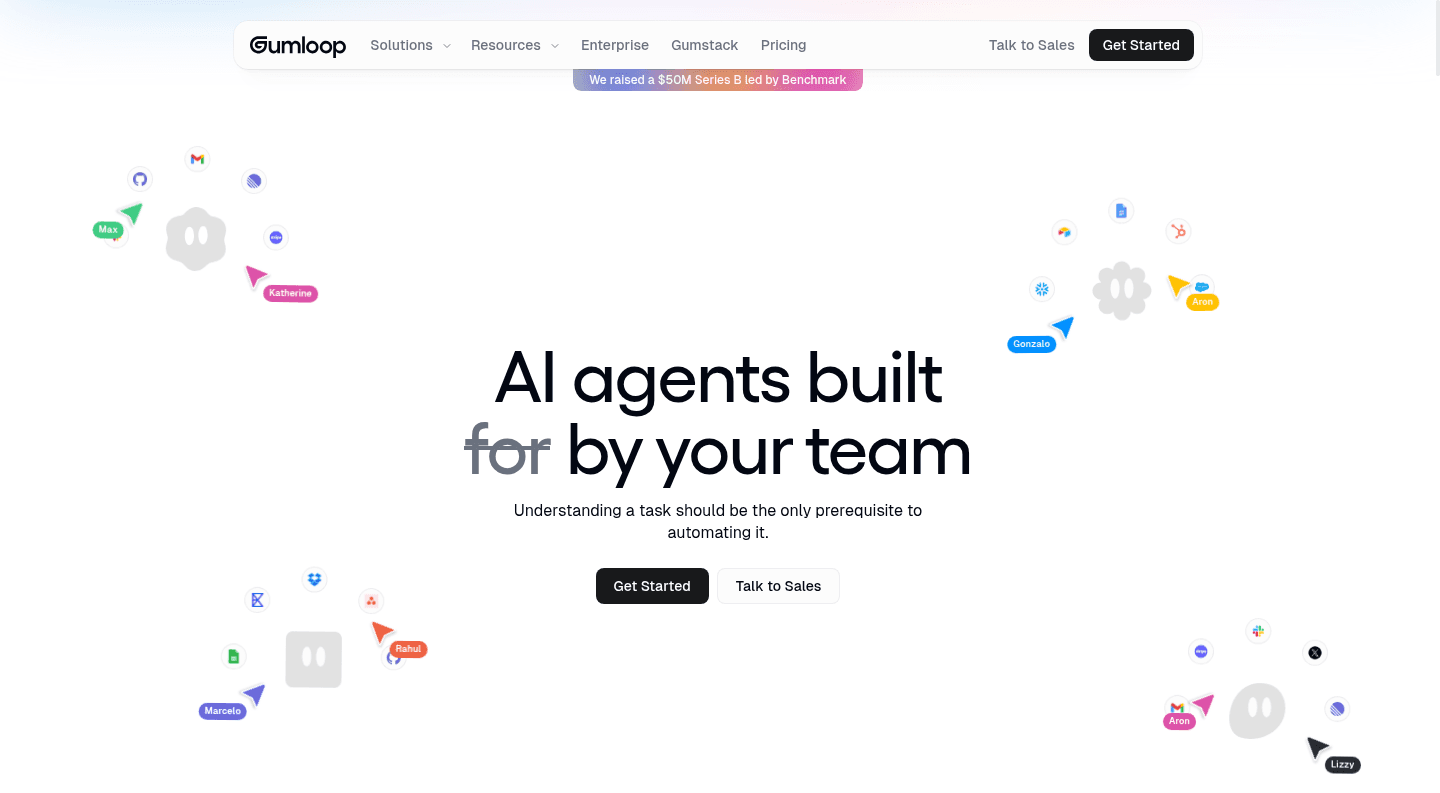
Choose Gumloop when process flexibility and orchestration matter more than a predetermined roster. It can be a better fit for technical operations, data-heavy workflows, and organizations that want to control how agents use tools and models. The trade-off is the design burden. A flexible platform still needs someone to choose the right process, connect data safely, define success, handle exceptions, and maintain the workflow as the company changes.
4. Blaze: best for content and channel execution
Blaze is the most marketing-production-focused option in this comparison. Its current platform covers organic content across social, blogs, newsletters, and Google Business Profile, along with paid ads, landing pages, reputation management, and an AI sales development representative. It also offers software-led and managed-service paths, which matters for small businesses deciding whether they want a tool or a team to run the work. Review Blaze's current marketing platform
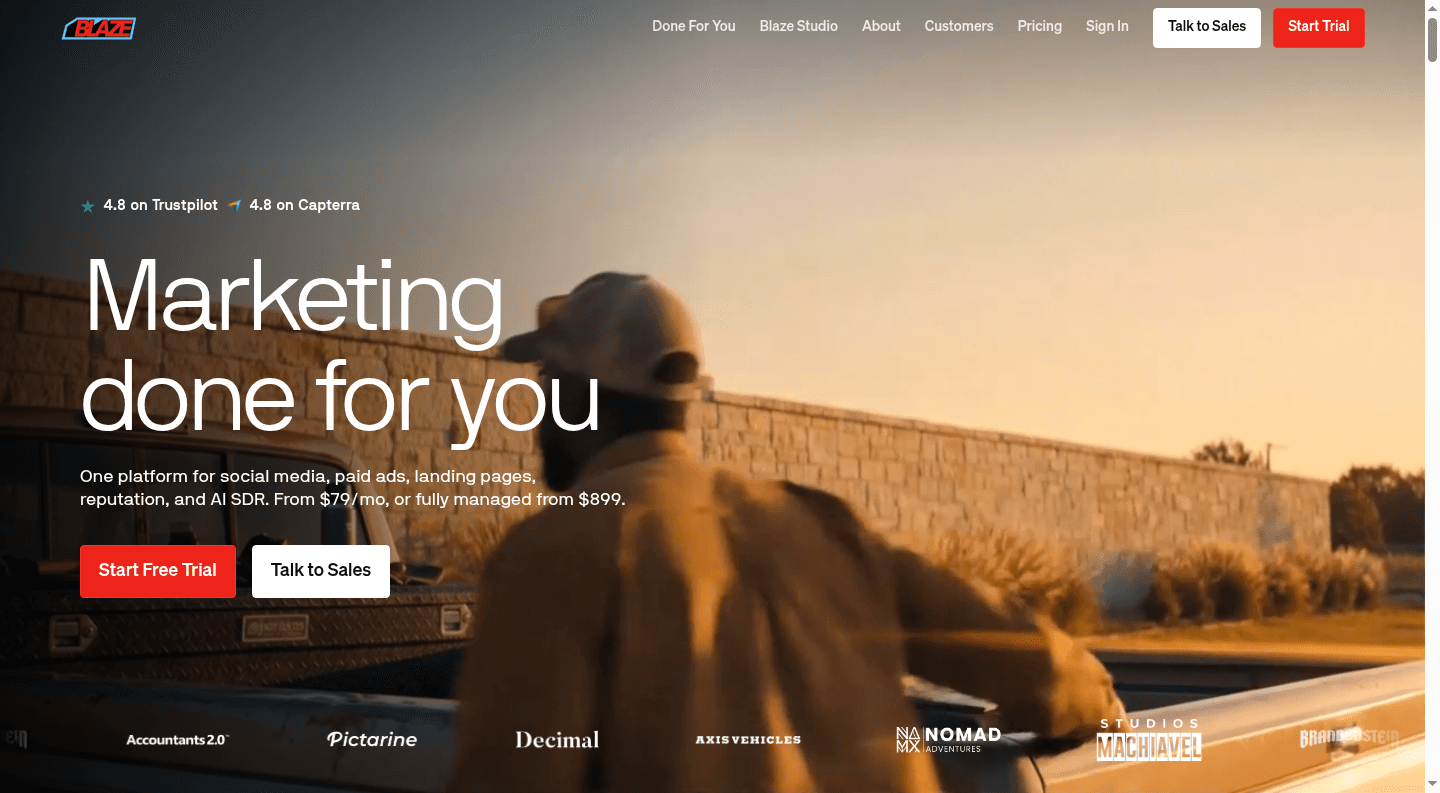
Choose Blaze when consistent marketing production is the recurring job and the business wants social, content, ads, or campaign assets in one place. It can fit local services, ecommerce, real estate, hospitality, and other businesses where a visible publishing cadence matters. The trade-off is that a marketing production platform is not automatically a source of product strategy, repository-aware implementation, executive admin, or arbitrary cross-app orchestration.
5. Zapier: best for deterministic app-to-app automation
Zapier is a better Sintra AI alternative when the workflow is already understood and the problem is moving information or actions across a large app stack. A team can define triggers, actions, filters, and AI-assisted steps for tasks such as enriching form submissions, updating records, routing leads, creating tasks, summarizing messages, or notifying owners. Its breadth makes it useful infrastructure rather than a replacement employee with one fixed job. Review Zapier Agents
Choose Zapier when you can write the process down before you build it. It is often the right glue between systems and can support AI agents that act across connected applications. The trade-off is that workflow automation does not remove ownership of the workflow. Someone still decides which process matters, defines permissions, supervises exceptions, and checks whether the automation changed the business outcome.
6. ActiveCampaign: best for lifecycle marketing
ActiveCampaign is the stronger alternative when the central job is nurturing, onboarding, retaining, or winning back contacts through behavior-based customer journeys. Its operating center is the customer record and the sequence of messages and actions that follow from customer behavior. That is a narrower promise than a team of AI employees, but it can be much deeper for a business whose growth engine is email and lifecycle automation. Review ActiveCampaign marketing automation
Choose ActiveCampaign when the business has enough contact activity to make segmentation and journeys valuable, and when someone owns the offer, consent, deliverability, and customer experience. It is not the closest fit for personal executive assistance, arbitrary agent workflows, or repository-aware product changes. That boundary is useful: a specialist lifecycle system can outperform a broad assistant when the recurring job is already known.
7. Jasper: best for governed brand content
Jasper is a credible alternative for marketing teams that need to produce content at volume while preserving shared brand and organizational context. Its platform is designed around marketing-specific agents, workflows, knowledge, and governance. Compared with a general role-based helper, the appeal is a dedicated operating environment for briefs, campaigns, brand consistency, and review across a content organization. Review Jasper's current platform
Choose Jasper when the bottleneck is governed content production, not broad business assistance. It can be a better fit for teams with many writers, campaign variants, brand rules, and approval requirements. The work still has a boundary after generation: channel strategy, publishing, technical site changes, product decisions, and outcome measurement remain with the team's other systems and owners.
When Sintra AI may fit better
Sintra AI may be the right answer when a founder wants a recognizable roster of helpers without designing every workflow from scratch. The role-based interface can make delegation easier for a small business that needs broad support across social, SEO, sales, support, email, data, and admin. Shared business context also reduces the need to re-explain the company to each helper. If that experience matches the work, switching to a more technical workflow builder or a narrower specialist could add setup without removing more work.
It may also fit better when the business is not a software product and does not need repository-aware implementation. Tin Computer earns its place when site, product, analytics, support, and acquisition evidence must become reviewable growth work. Gumloop earns its place when a team needs custom orchestration. Lindy earns its place when executive admin is the constraint. The best alternative is the one that owns the repeated job, not the one with the broadest feature list.
How to choose a Sintra AI alternative
A seven-part handoff test
Run one real weekly task through your shortlist and score the whole path, not the demo.
- Name the exact recurring job you want to stop doing.
- List the context, systems, and permissions the product needs.
- Count how much workflow design remains with your team.
- Inspect the finished output, not only the generated draft.
- Check where customer, public, spend, payment, and deployment approvals occur.
- Test exception handling and how easily an action can be reversed.
- Confirm that the business result can be measured after the work runs.
A useful trial should reduce the full cycle from context to approved result. If the product creates a polished answer that still needs a founder to translate it, move it into another system, implement it, and remember to measure it later, the handoff is incomplete. If it safely owns the repeated job and leaves only the decisions that genuinely require judgment, it is doing the work an alternative should do.
Compare marketing automation tools by job
See where CRM, app workflow, lifecycle, content, and growth-execution platforms fit.
Compare one platform with point tools
Use the handoff test to decide what should stay specialized and what should share context.
See Tin's evidence-to-action method
Read the seven-step process for turning product evidence into a ship, repair, or wait decision.
Frequently asked questions
- What are the best Sintra AI alternatives?
- The best Sintra AI alternatives are Tin Computer for shipped growth work, Lindy for executive admin, Gumloop for custom AI workflows, Blaze for marketing production, Zapier for app automation, ActiveCampaign for lifecycle marketing, and Jasper for governed content. The right choice depends on the repeated job you want the product to own.
- What is Sintra AI used for?
- Sintra AI presents named AI employees for business roles including social media, SEO, sales, business development, support, ecommerce, data, email, and executive assistance. Users provide shared business context, connect tools, and configure rules or approval levels for the work.
- Is Tin Computer a Sintra AI alternative?
- Yes, for a specific use case. Tin Computer is an alternative when a founder needs growth work diagnosed, prioritized, and delivered across the site, product, analytics, search, support, and acquisition surfaces. Sintra AI may fit better when the desired experience is a broad roster of role-based business helpers.
- Which Sintra AI alternative is best for a solo SaaS founder?
- Tin Computer fits a solo SaaS founder whose bottleneck is shipping growth work across product and marketing. Lindy may fit better when email and meetings are the main burden, while Zapier or Gumloop may fit better when the founder already knows the workflow that needs automation.
- Which alternative is best for building custom AI agents?
- Gumloop is the strongest fit in this comparison for visual, configurable AI agents and multi-step workflows using connected models, tools, and data. Zapier is a strong alternative when the main requirement is deterministic actions across a broad application ecosystem.
- Which Sintra AI alternative is best for content marketing?
- Blaze fits small businesses that want content and channel execution in one marketing platform. Jasper fits marketing organizations that need governed content production with shared brand context. Tin Computer fits when content is only one part of a wider evidence-led growth backlog.
- Which alternative is best for email and calendar work?
- Lindy is the most focused alternative here for inbox organization, drafted replies, scheduling, meeting preparation and notes, action items, and reminders. ActiveCampaign is the better choice when email means lifecycle campaigns and customer journeys rather than personal admin.
- When should I keep Sintra AI instead of switching?
- Keep Sintra AI when named role-based helpers, shared business context, connected-tool work, and configured approval levels match how your team wants to delegate. Do not switch merely because another product has more workflow options or a longer feature list.
- How should I compare AI employee platforms?
- Test one representative weekly task. Measure setup, context required, human workflow design, output completeness, approval safety, exception handling, reversibility, and whether the result can be measured. Compare the full handoff rather than prompt quality alone.
- Did Tin Computer test every product in this comparison?
- No. This comparison uses current public product pages and Tin Computer's verified product map as of July 27, 2026. It does not claim logged-in trials of every vendor or assign invented performance scores. The official product pages are linked so buyers can verify current packaging.
Point it at your site. Watch it ship.
Paste your domain. Tin inspects site health, the first-time visitor experience, and organic search opportunities, then returns a prioritized growth plan with the first fixes to ship. No card.
Claude Code · Codex · Cursor