
Comparison · 2026
The best AI marketing automation tools in 2026, compared by the job
Tin Computer, HubSpot, Zapier, ActiveCampaign, and Jasper all automate marketing differently. This guide shows where each one wins, where it stops, and which fit is honest for your team.
By Tin Computer · Published July 21, 2026 · Updated July 21, 2026
Free five-step scan · No card · See it run on your site
The best AI marketing automation tool depends on the job. Choose HubSpot when the CRM should anchor your campaigns, Zapier when work must move across many apps, ActiveCampaign for lifecycle email, Jasper for governed content production, and Tin Computer when a lean team needs an agent to diagnose growth work and ship reviewable changes across product and marketing.
That distinction matters because ‘AI marketing automation’ now covers several different products. Some execute a workflow you design. Some generate or govern campaign content. Some predict the next customer action inside a marketing database. Others can inspect the site, code, analytics, and acquisition channels, decide what deserves attention, and carry the work into implementation. Buying by feature count hides those differences; buying by the recurring job makes them useful. Compare an all-in-one platform with point tools
We compared the products through their current public product pages and the work a founder or lean team can realistically hand them. The criteria are primary job, required system of record, cross-channel reach, ability to change a website or product, approval model, and the human work left after the software produces an answer. Vendor screenshots below were captured from the live product pages on July 21, 2026. Product packaging changes, so verify a shortlist against the linked source before purchasing.
Quick choice
Do not ask which platform has the most AI. Ask which unfinished job repeats every week: coordinating campaigns, connecting apps, nurturing leads, producing on-brand content, or shipping the growth work itself.
How they compare
| Decision | Tin Computer | HubSpot | Zapier | ActiveCampaign | Jasper |
|---|---|---|---|---|---|
| Best at | Shipping growth work | CRM-centered marketing | Cross-app workflows | Lifecycle email automation | Governed content production |
| Starts from | Site, code, goals, and connected data | CRM records and campaigns | A trigger, prompt, or workflow | Contacts, behavior, and journeys | Brand context and a content brief |
| Website or product changes | Reviewable code changes | Changes inside HubSpot surfaces | Routes data and actions between apps | Changes journeys and messages | Produces content for publishing |
| CRM depth | Connects to evidence | Core strength | Connects to CRMs | Core strength | Not the core job |
| Human role | Approve risky or public actions | Design the campaign system | Build and supervise workflows | Design journeys and offers | Brief, edit, and approve content |
| Honest best fit | Founders and lean SaaS teams with an execution backlog | Teams standardizing marketing and sales around one CRM | Teams with a diverse app stack and clear processes | Teams whose growth engine is email and retention | Content teams that need brand control at volume |
A job-based comparison. Capabilities overlap, but the operating center of each product is different.
The other products win when their operating center matches yours. HubSpot is the stronger choice if the CRM and campaign suite should become the center of the company. Zapier is more flexible for deterministic handoffs across a large app stack. ActiveCampaign is more focused for contact journeys and lifecycle messaging. Jasper is more purpose-built for a content organization that needs brand governance. Tin Computer is the better fit only when the bottleneck is deciding and shipping growth work across the site, product, analytics, and channels, with the founder retaining approval over consequential actions.
1. Tin Computer: best for shipping a lean team's growth backlog
Tin Computer is built around execution rather than a campaign canvas. It reads the product, public site, repository, goals, and connected evidence, then turns that context into bounded work: a technical fix, search page, measurement repair, funnel improvement, outreach draft, or campaign plan. Website and product changes arrive as reviewable pull requests. External sends, ad activation, spend changes, production deployments, and other consequential actions stay behind explicit founder approval. See how Tin Computer works
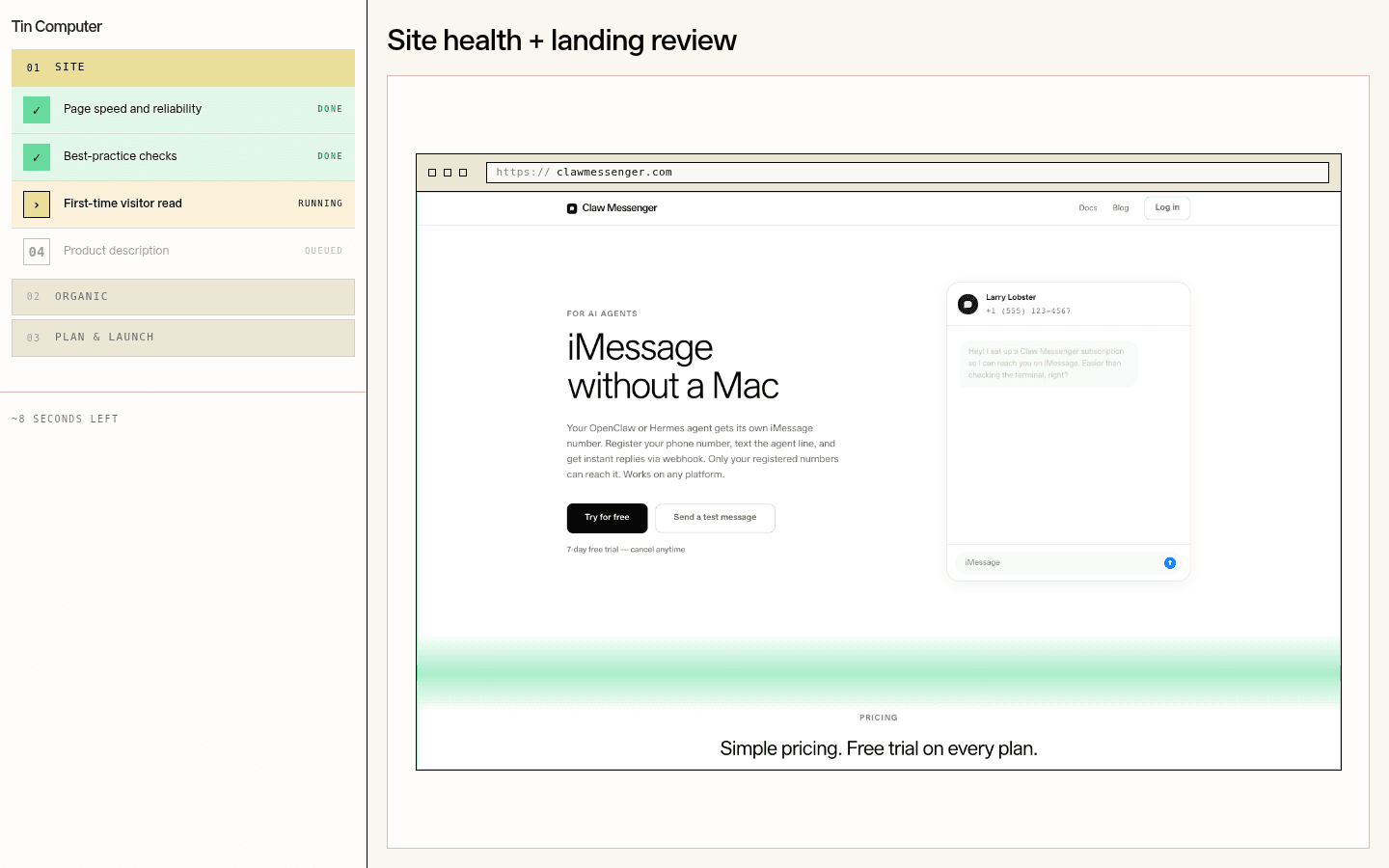
Choose Tin when a small team already knows it needs growth work but cannot keep research, implementation, review, and measurement moving. The useful distinction is that the output can be the finished change, not only a draft or instruction. Tin is not the strongest replacement for a mature CRM, an enterprise content governance system, or a general integration builder. It also should not remove founder judgment: positioning, customer promises, budget, and public communication remain decisions rather than unattended automation.
2. HubSpot Marketing Hub: best when the CRM is the center
HubSpot Marketing Hub brings campaigns, lead capture, customer data, reporting, and automation into the same ecosystem as HubSpot's CRM. That makes it the most natural fit in this group for a team that wants one customer record to coordinate marketing and sales. Its current product page emphasizes attracting, converting, and engaging high-intent visitors, with campaign tools organized around the broader HubSpot platform. Review HubSpot's current Marketing Hub
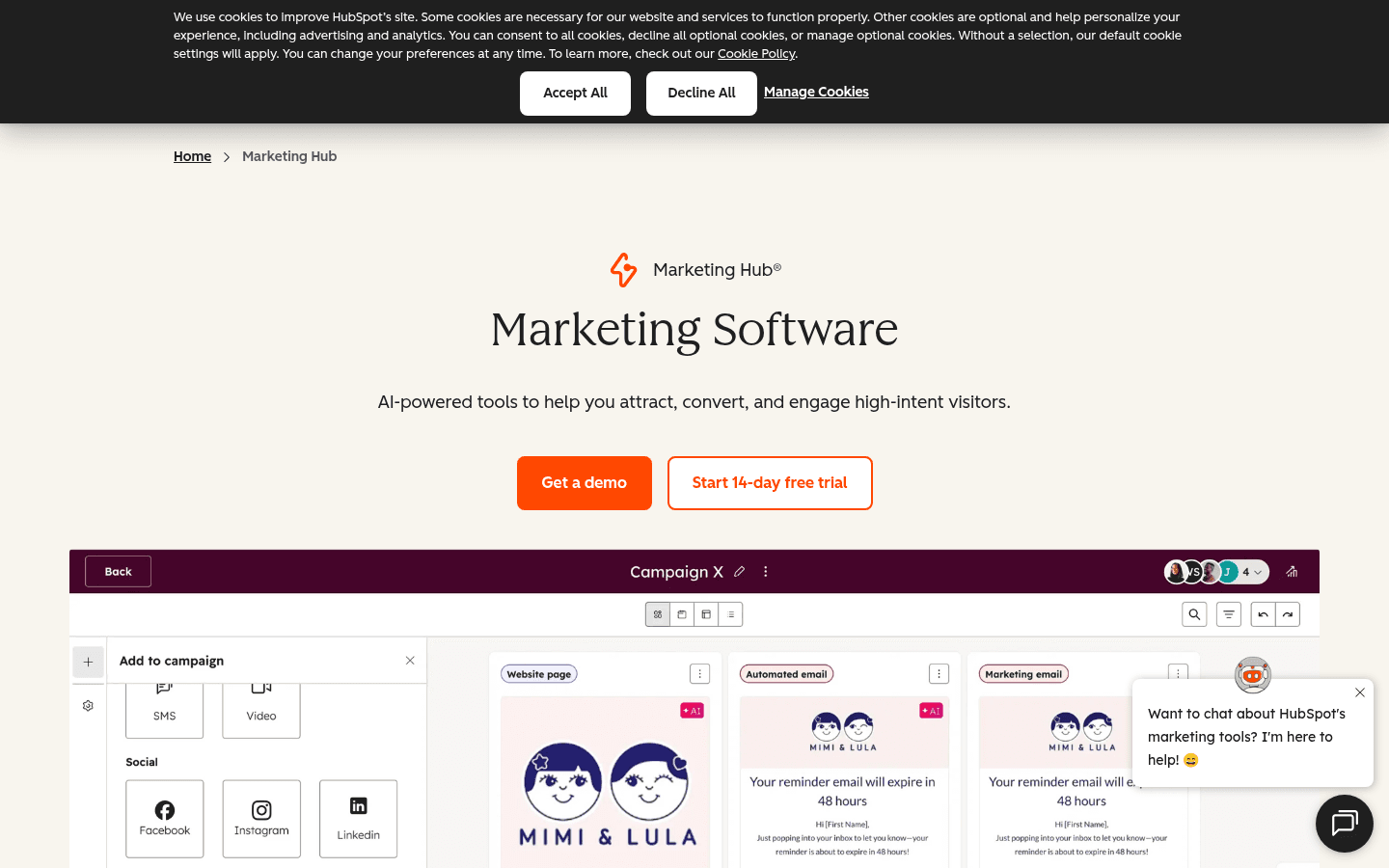
Choose HubSpot when the main problem is fragmented customer data, inconsistent lead handling, or campaign reporting spread across separate systems. It gives a growing marketing and sales organization a shared operating model. The trade-off is that a suite still needs someone to design campaigns, maintain the database, interpret results, and implement work outside its surfaces. If the real backlog is editing the product, fixing a public page, or deciding the next growth bet from several evidence sources, a CRM-centered suite may organize the work without becoming the person who ships all of it.
3. Zapier: best for flexible automation across many apps
Zapier's strength is breadth. Its automation products connect triggers and actions across a large app ecosystem, while Zapier Agents adds a prompt-driven way to create AI teammates that use company knowledge and act across connected tools. It is a strong choice when the team can describe the process and needs dependable movement between systems: enrich a form submission, update a CRM, create a task, summarize a message, or notify an owner. Review Zapier Agents
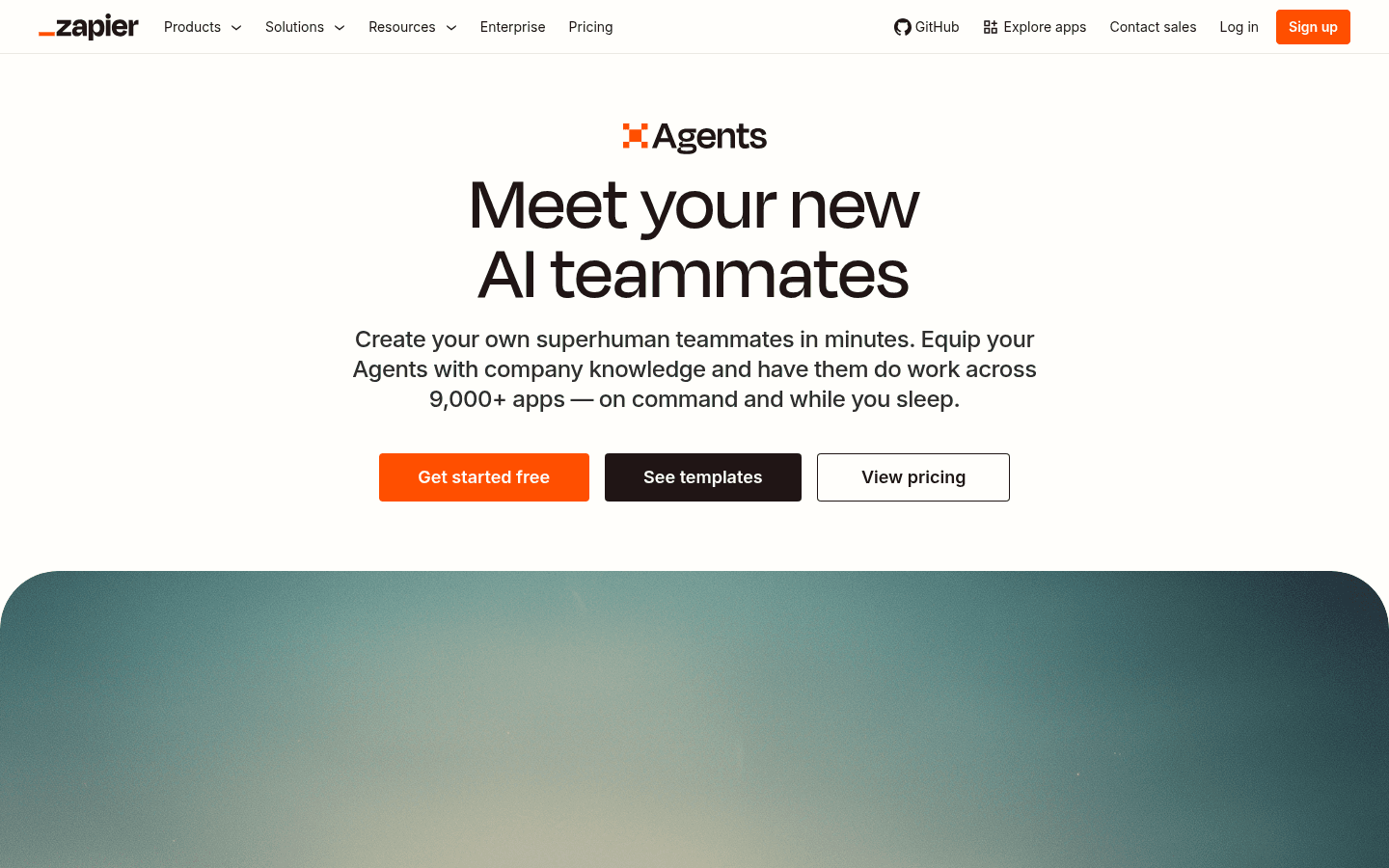
Choose Zapier when the recurring task is clear and the hard part is connecting systems without custom integration code. It is especially useful for operational glue and repeatable handoffs. The main trade-off is ownership of the process: someone still has to decide what the workflow should do, define safe inputs and outputs, handle exceptions, and update it as the business changes. A workflow tool can move a lead or launch a known action; it does not automatically mean it will diagnose whether lifecycle email, pricing, search, onboarding, or support friction is the growth constraint this week.
4. ActiveCampaign: best for lifecycle email and customer journeys
ActiveCampaign is the most focused choice here for teams whose growth engine depends on email, contact behavior, segmentation, and automated customer journeys. Its marketing automation product is designed to react to customer signals and coordinate messages over time. That is a different job from generating a one-off campaign asset or changing a product page: the value comes from maintaining a responsive lifecycle system around contacts. Review ActiveCampaign marketing automation
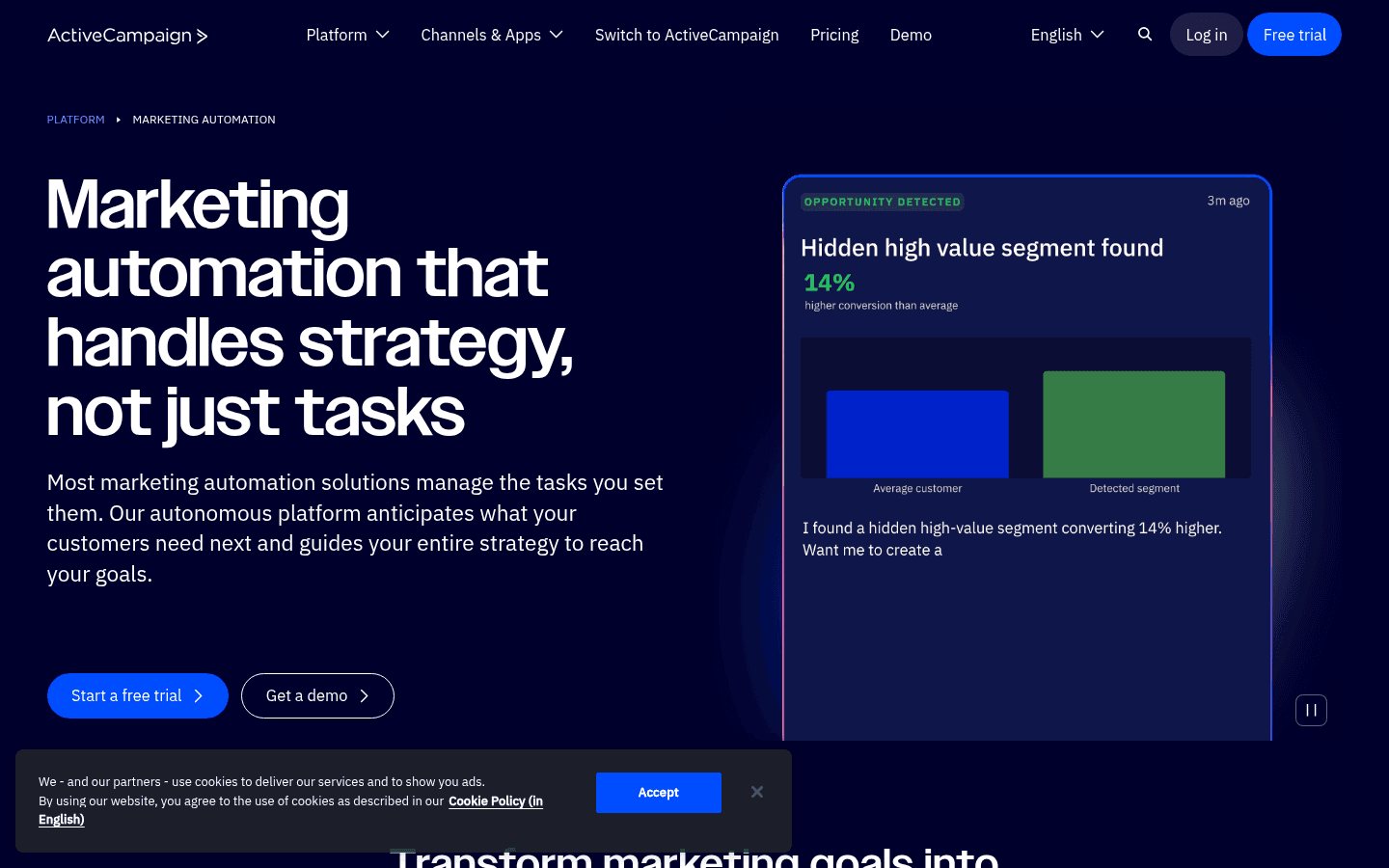
Choose ActiveCampaign when better nurturing, onboarding, retention, or win-back sequences can materially move the business and you have enough contact activity to design meaningful journeys. The trade-off is scope. It can automate a sophisticated relationship with the customer, but it is not primarily a code-shipping system or a general app-integration layer. Teams also remain responsible for the offer, message quality, consent, deliverability, and the rules that put a person into each journey.
5. Jasper: best for governed marketing content at scale
Jasper is built for marketing teams that need AI-assisted content without losing brand governance. Its current platform presents AI agents and workflows for marketing, with brand and organizational context shaping the output. That makes it a more credible fit than a generic writing assistant when many people need to produce campaign material while preserving a shared voice, knowledge base, and review process. Review Jasper's current platform
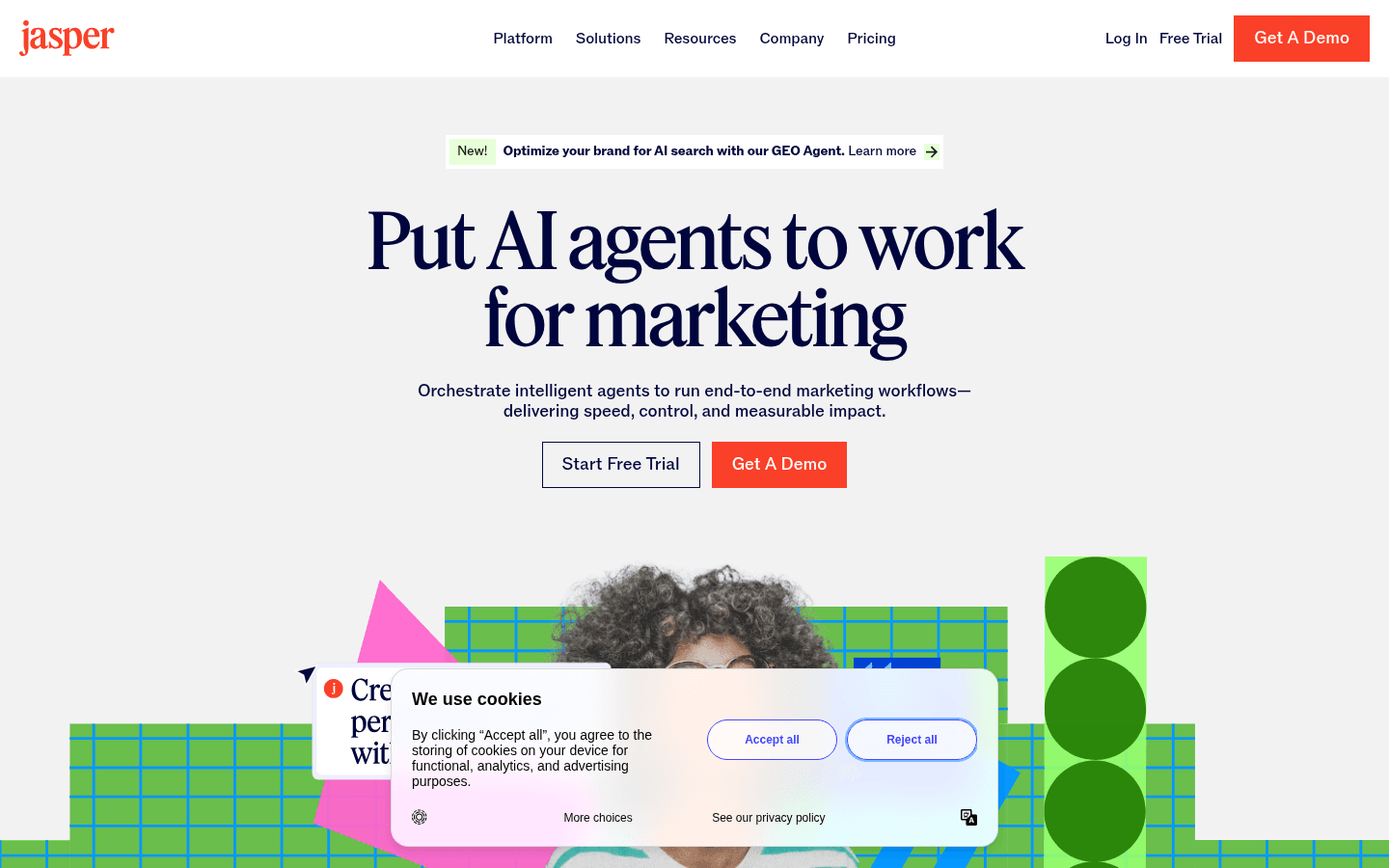
Choose Jasper when the repeated bottleneck is producing, adapting, and governing content across a real marketing organization. It gives content leaders a dedicated environment rather than asking them to assemble brand controls inside a general chat tool. The trade-off is the boundary after content production. Your team still owns channel strategy, publishing, technical site changes, campaign operations, and the measurement loop unless those are handled by other systems and people.
How to choose without buying another unused platform
Start with a two-week sample of work, not a feature checklist. Write down the last ten marketing tasks that were delayed, done manually, or abandoned. Label each one: customer data and campaigns, app-to-app operations, lifecycle messaging, content production, or diagnosis and implementation. The largest repeated category tells you which operating center you need. If the list is scattered, identify the constraint whose removal would make the other work easier rather than buying five overlapping products at once.
- Pick HubSpot when a shared customer record and integrated campaign suite will reduce the most friction.
- Pick Zapier when the process is known and the bottleneck is moving information and actions between tools.
- Pick ActiveCampaign when lifecycle email, segmentation, and customer journeys are the growth system.
- Pick Jasper when a content team needs faster production with consistent brand and organizational context.
- Pick Tin Computer when the backlog spans diagnosis, code, public pages, analytics, and channels, and the missing piece is bounded execution.
Then run one representative task through the shortlist. Measure setup time, useful output, time to a finished business result, exception handling, and how easily a human can inspect or reverse the action. A polished demo is not enough. The right system should reduce the full cycle from evidence to approved result without making the team less aware of what changed.
Use approval boundaries as a buying criterion
More autonomy is not automatically better. Separate reversible internal actions from commitments that affect customers, money, production, or reputation. Drafting a campaign, analyzing a funnel, or preparing a code change can happen with broad autonomy. Sending the message, increasing spend, changing a customer record, publishing a claim, or deploying production deserves a visible approval step. Ask every vendor how actions are logged, reviewed, retried, and reversed. The answer matters more than another generated-content feature.
Frequently asked questions
- What are AI marketing automation tools?
- AI marketing automation tools use models plus connected data or workflows to perform marketing work. Depending on the product, that can mean generating governed content, moving data between apps, automating customer journeys, coordinating CRM campaigns, or diagnosing and shipping growth changes.
- How are AI marketing automation tools different from traditional marketing automation?
- Traditional automation usually follows rules a person defines: when this event happens, run these steps. AI can interpret unstructured inputs, generate content, choose among actions, or adapt a workflow. The exact level of judgment and action varies widely by product.
- What is the best AI marketing automation tool for a small business?
- Choose by the repeated job. A CRM-centered business may prefer HubSpot, an email-led business ActiveCampaign, a multi-app operation Zapier, a content team Jasper, and a lean product company with an unshipped growth backlog Tin Computer. Test one real task before committing.
- What is the best option for a solo SaaS founder?
- A solo founder should prioritize reduction in finished-work time. Tin Computer fits when the backlog includes site, product, analytics, search, and growth execution. Zapier may fit better for known operational workflows, and ActiveCampaign may fit better when lifecycle email is already the main channel.
- Which tool is best for email marketing automation?
- ActiveCampaign is the most focused option in this comparison for behavior-based lifecycle email and customer journeys. HubSpot is a stronger alternative when email should sit inside a broader CRM and campaign suite.
- Which tool is best for connecting marketing apps?
- Zapier is the clearest fit when the job is connecting triggers, data, and actions across many applications. The team still needs to define the process, permissions, exception handling, and desired result.
- Which tool is best for AI marketing content?
- Jasper is the most purpose-built choice in this group for marketing content with shared brand and organizational context. A general workflow or execution platform may generate text, but Jasper's operating center is governed marketing production.
- Can AI marketing automation replace a marketer?
- It can remove substantial research, coordination, production, and implementation work, but it should not own company judgment. Positioning, promises, customer empathy, budget, and reputation-sensitive decisions still need an accountable human.
- Do I need more than one marketing automation tool?
- Often, but avoid overlapping purchases before one system proves value. Many teams use a CRM or lifecycle platform as the system of record, an integration layer for handoffs, and a specialized execution or content tool. Add another product only when a recurring job has a clear owner and measurable outcome.
- What should I test during a marketing automation trial?
- Run one representative task from real evidence to a finished result. Record setup time, manual steps, output quality, approval clarity, exception handling, reversibility, and whether the outcome can be measured. Do not evaluate only the quality of a generated draft.
Related
Overview
An AI marketing agent that ships the work, not just advice
AI SEO
The AI SEO tool that does the SEO, not just the audit
AI sales
An AI SDR that earns replies instead of burning your domain
AI UGC & ads
AI ad creative that gets tested, not just generated
AI SEO
The best AI SEO tools in 2026, honestly compared
Point it at your site. Watch it ship.
Paste your domain for the free scan. Tin Computer reads your site, finds the work, and starts shipping. No card, cancel anytime.
Claude Code · Codex · Cursor