
Build the keyword inventory
Research buyer searches and competing pages with evidence kept for each opportunity. Browse keyword work
Home/SEO/All-in-One SEO Software Tied to Signups and Revenue
Tin provides all-in-one SEO software for coding agents, bringing keyword research and page work together with Search Console, PostHog and Stripe. We run the research, writing and technical fixes. When we choose the next page to work on, we read the search figures alongside product activity and paying-customer findings.
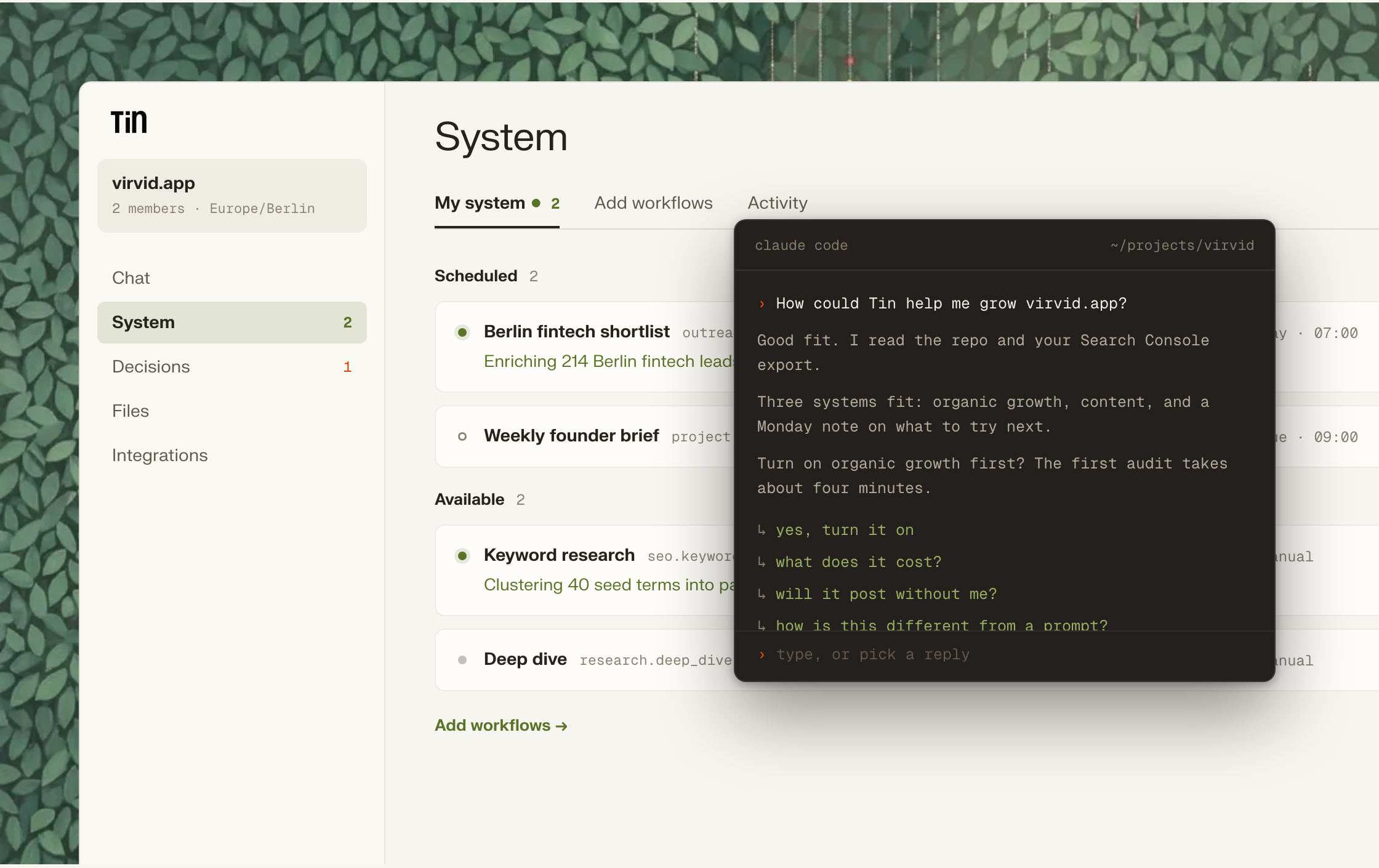
All-in-one SEO software bundles keyword research, rank tracking, site audits, backlink analysis and competitor research under a single login. Some suites also include AI visibility tracking. Those reports help a small team choose searches to pursue and inspect the pages already competing for them. Backlinko's 2026 audit-tool review describes this range of work across suites and specialist audit products, each suited to different parts of the job.
Suites such as Semrush, Ahrefs and SE Ranking bring SEO research and tracking together. A specialist desktop crawler such as Screaming Frog supports detailed checks of individual URLs. Tin puts SEO jobs beside Search Console, PostHog and Stripe in a project a coding agent can read. The useful test is whether search figures sit beside signups and paying customers when the team chooses the next page to work on.
The team checks rankings and clicks each week, while signup and payment data sit in separate accounts.
Reading search beside product and billing data gives the team more to judge its page priorities by.
Tin brings the site's search evidence, product activity and paying-customer research into the same project as the SEO work.
With Search Console connected, keyword research can use the site's own search data. Tin combines it with buyer searches, competitor keywords and a bounded sample of Google results. The run buys data within the chosen cap. Its saved inventory shows the evidence behind each search it proposes.
The PostHog brief reports activation, event trends, traffic and error signals daily or weekly. It includes the evidence needed to reproduce its numbers. Open that brief beside the keyword research. The product's events and traffic are then part of the discussion about whose questions the site should answer.
Tin reads Stripe subscriptions to identify customers who continue paying. That read-only job produces inputs for keyword research, outreach and ads aimed at similar buyers. For the next content plan, the team can begin with those customers and research what similar buyers search for.
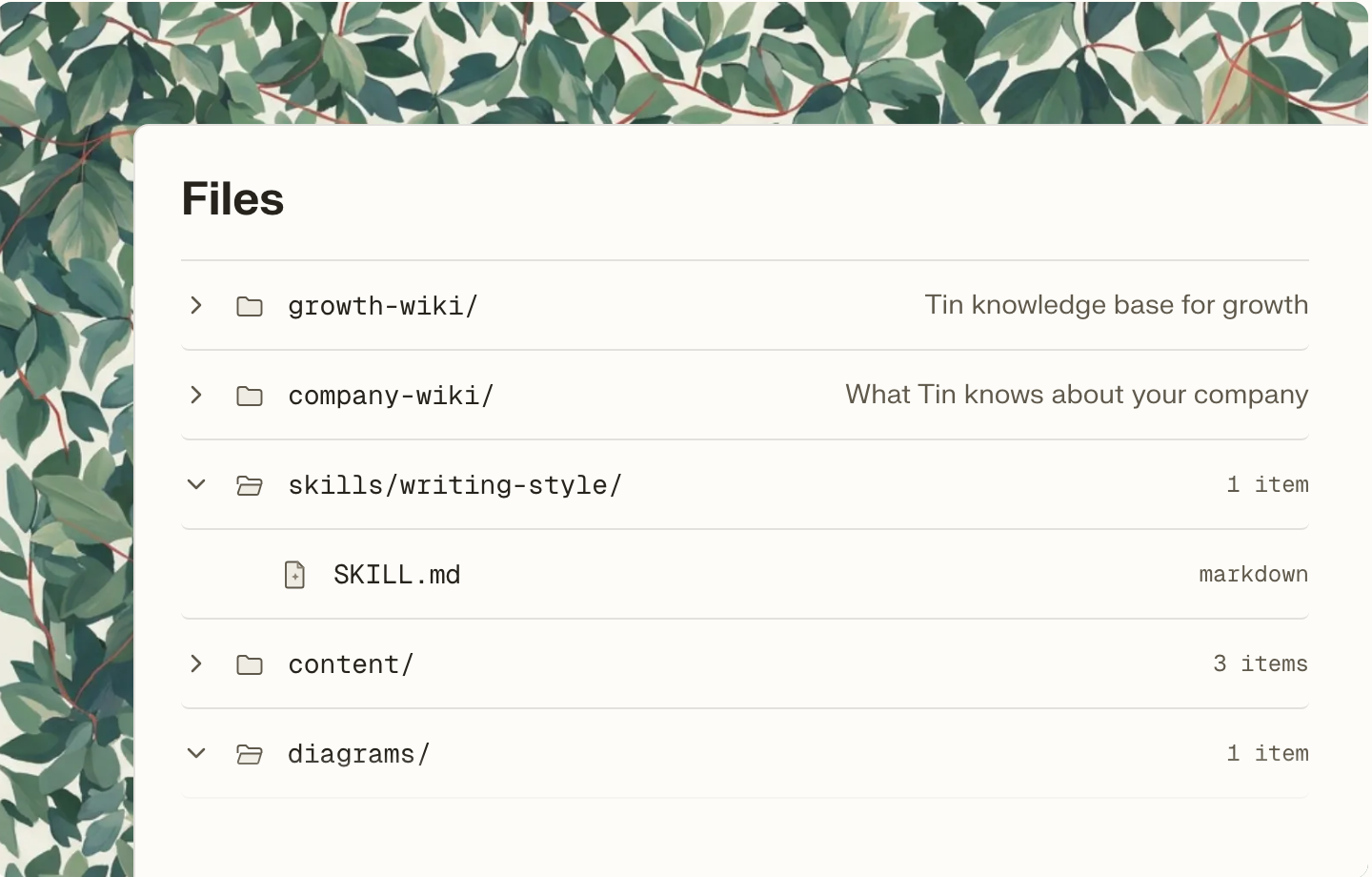
The audit reads up to 100 public pages for technical problems and checks whether AI answers mention the business. Findings and supporting evidence go into project Files. The report gives the agent and team specific pages to examine before choosing which fixes or content to work on.
Page changes arrive through pull requests or one-click publishes, with the owner deciding what goes live. You approve what ships. The proposed text stays with the research in the project. Read the draft against the search evidence before deciding whether to publish the change.
Research buyer searches and competing pages with evidence kept for each opportunity. Browse keyword work
Use the research to plan which buyer questions the site should answer. Browse content planning
Rewrite the title, description and opening where the most search impressions are at stake. Browse page refreshes
Prepare articles from project context for the people responsible for the site. Browse article work
Find unlinked mentions and draft requests pointing readers toward the product. Browse backlink work
Summarise runs, files and open items before choosing the next SEO task. Browse weekly reports
An engineer can call SEO jobs from a script or a coding agent. We can also run the research and page work for you.
Connect Codex using the command below, use the API from a script, or open the same projects in the browser.
codex mcp add tin --url https://app.tin.computer/mcp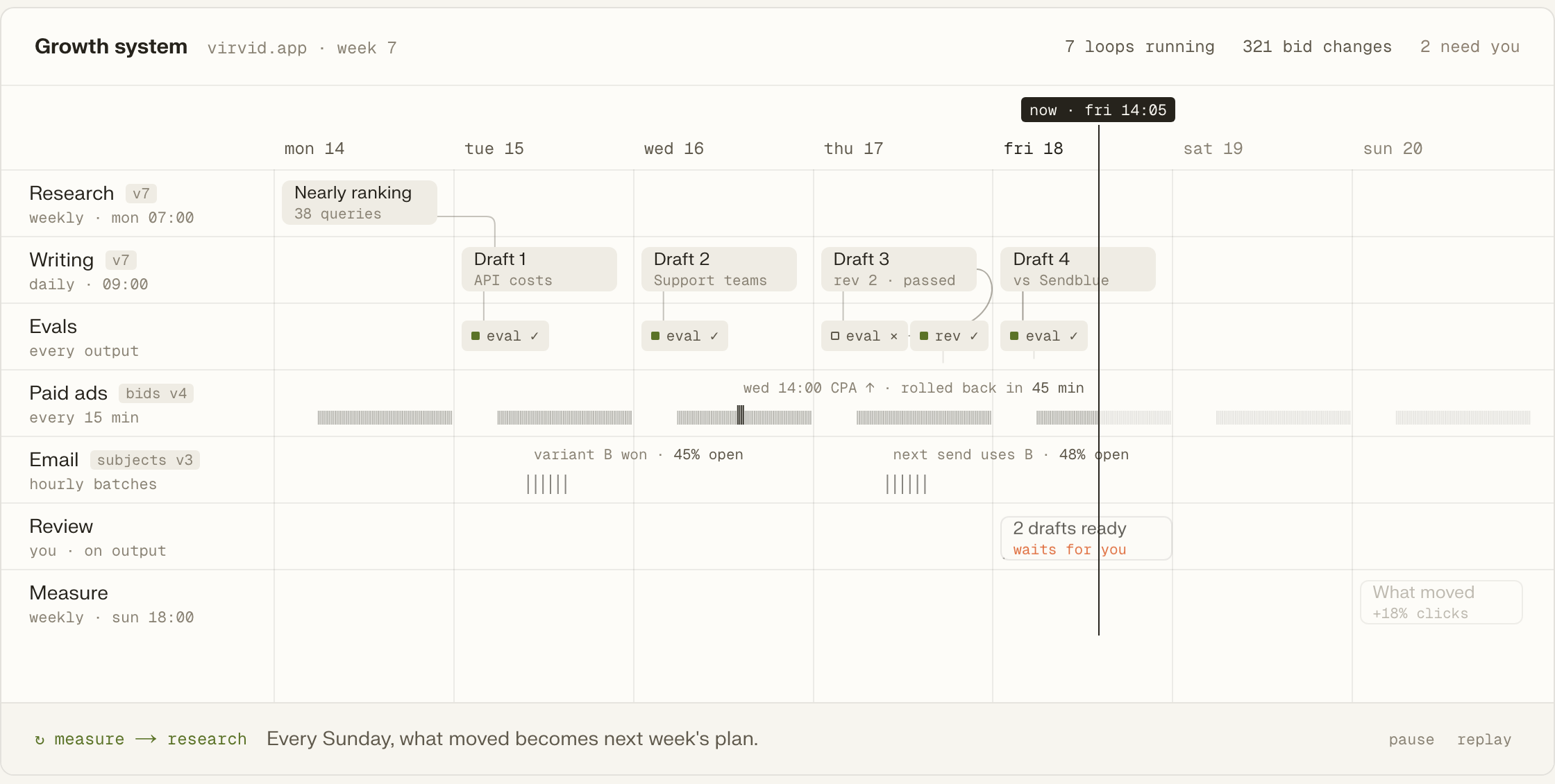
Save jobs with their inputs and a schedule, then read the weekly brief for completed work and open items.
We research keywords, write buyer guides and comparison pages, and fix technical problems as part of the growth experiments.
Each SEO workflow, from audit to keyword plan, is a text file in the repo.
Run the audits with your own keys, against your own data, when you choose.
Rework any SEO step in its file and send the edit back.
We can discuss the pages your search data suggests working on, alongside signups and payments. Our people handle the writing, technical fixes, listings and backlinks, then review what to continue, change or stop.
Yes, its keyword and backlink databases can remain useful for your research. We use existing SEO tools ourselves for that work. Tin adds jobs for a coding agent and project files where search research can be read beside product analytics and paying-customer findings.
Yes, Tin has an API as well as its MCP server. A script can use the API, or an MCP-capable agent such as Claude Code, Codex or Cursor can call the jobs. The browser app opens the same projects so the team can read the work there too.
You can begin with the public site; Search Console adds the site's search evidence to keyword research. The audit reads public pages and saves its findings in the project. PostHog and Stripe add product activity and paying-customer research when those accounts are connected.
Our people choose and review the pages when we run your SEO. Agents prepare article drafts in the owner's voice, using the project context. We carry that writing through review before it reaches buyers, alongside the guides, comparisons and technical fixes the search work calls for.
Speak with the founders and engineers who would run the search experiments. We can discuss what your site shows today, what you know about signups and paying customers, and which pages deserve work first.