
Plan the content
Use the researched searches to choose the pages the company should write. See workflows
Home/Platform/Keyword Tool and Keyword Research for Coding Agents
Tin is a keyword tool your coding agent runs to research buyer and competitor searches and save the inventory in your project. Our people use the inventory to choose the content plan with you, then write the pages and develop the ad groups.
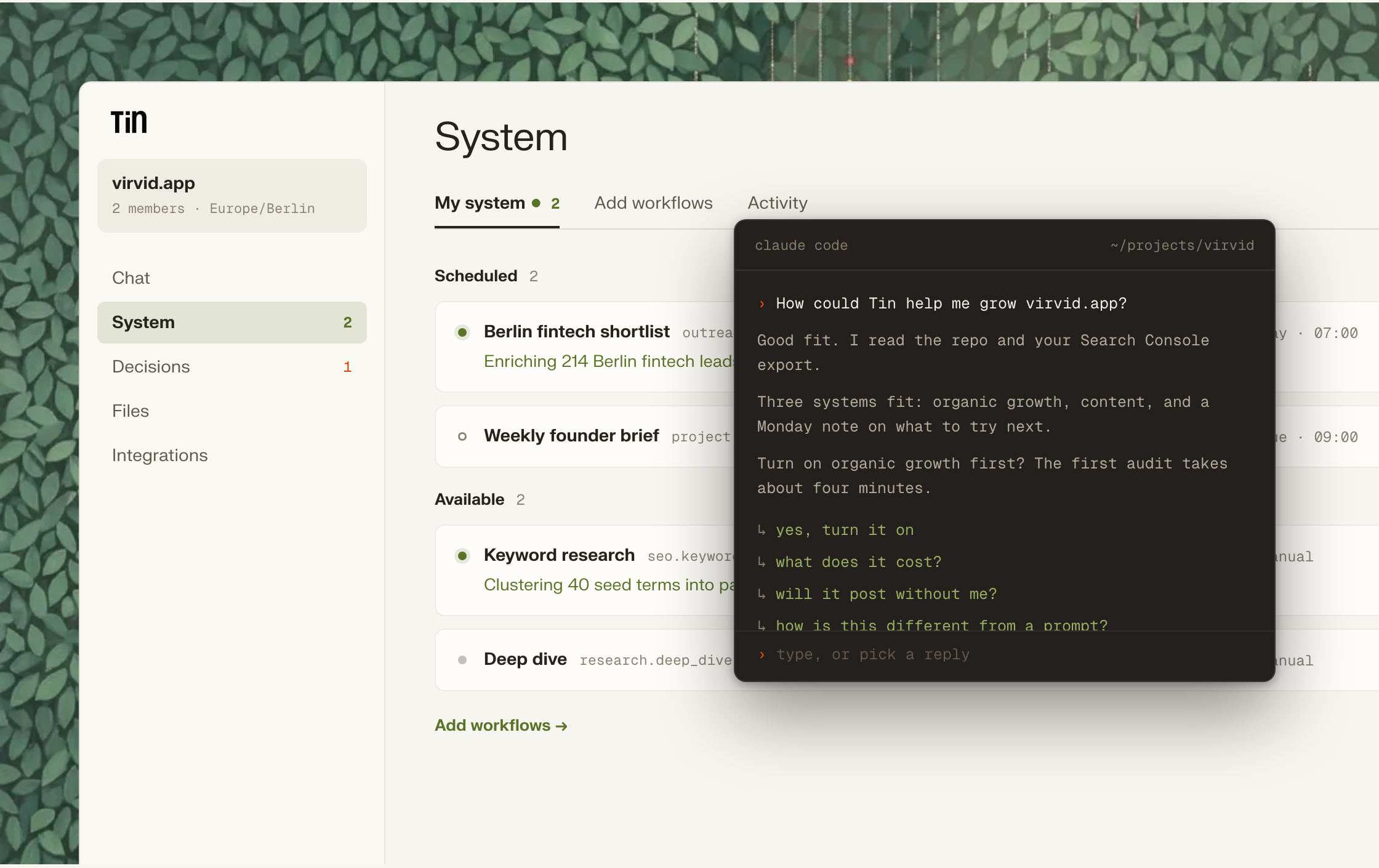
A keyword tool finds the phrases people search and reports measures such as volume and difficulty. A team uses keyword research tools to decide which searches warrant a page or ad; an AI keyword research tool automates more of that research. Some products also report page rankings. Once a list exists, its usefulness depends on someone carrying the relevant searches into the writing and campaign work.
You can browse a keyword database and export a sheet, or use an advertising platform's keyword volumes, which may combine similar phrases. Tin's workflow writes a researched inventory with its evidence into the project, where the content plan can read it. Compare these routes by whether the next step can use the list. A person still chooses the searches the site can compete for and the page that should answer each.
An exported sheet lists promising phrases, but the writer needs the results behind them before deciding which page to write.
Saving the evidence with the inventory gives the next planning step research it can use.
Tin saves the research beside the other project work, with the evidence that explains why each keyword belongs.
Your agent has read the product's code and docs. It can use those, with the positioning, to describe who buys the product and why. That buyer context goes into the keyword request with the site and market, so the job researches searches relevant to the company.
The run starts with your public site, market and buyer description, plus seed phrases or competitor hosts when supplied. It gathers buyer searches and competitor keywords, then samples Google results for a bounded set. Those results help explain the pages currently answering the relevant searches.
The job buys keyword and search-result data as it runs. A ceiling in the inputs limits those purchases for this request. Tin stays within it while researching the chosen product and market, so the amount available for data is a decision made before the run starts.
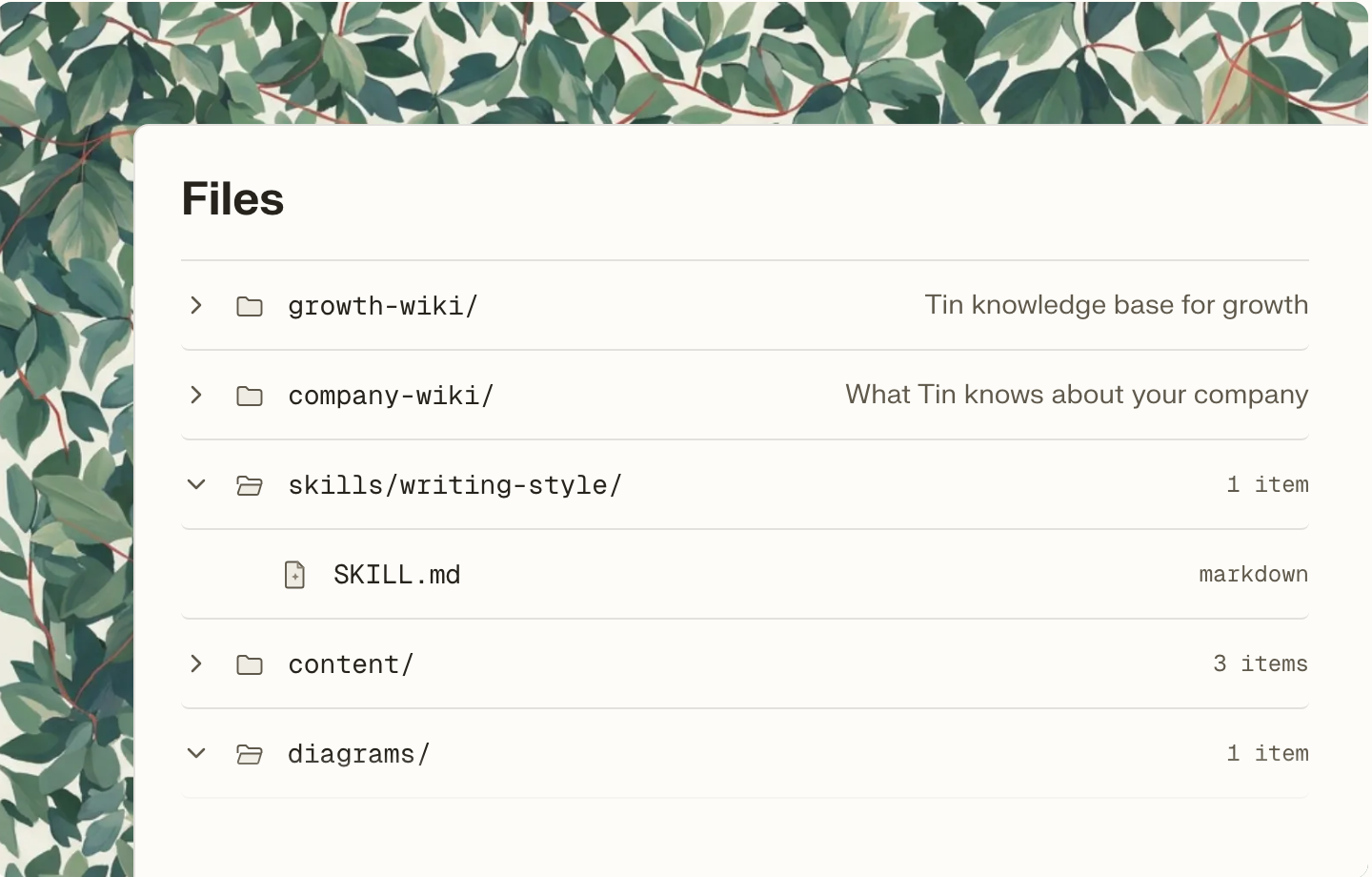
The completed inventory is saved in project Files with evidence for each entry. A writer can open the research while planning the page that answers a search. The content-plan workflow can read the same inventory, carrying the keywords and their supporting material into the next job.
Search Console supplies queries from the site when connected. The inventory can then draw on searches where its pages already appear as well as opportunities found in the market. We use that existing record when discussing which pages to keep working on and which questions call for something new.
Use the researched searches to choose the pages the company should write. See workflows
Develop a planned subject in the owner's voice using the project research. See workflows
Bring search research into revisions of pages already on the site. See workflows
Make pages around the exact error messages people search while solving problems. See workflows
Combine keyword data, the site and business economics to judge a campaign. See workflows
Carry the campaign work into Google Search after the owner approves it. See workflows
After adding Tin, ask the agent for keyword opportunities. It can write the buyer context itself from the product information it has read.
The command connects Codex to Tin's hosted MCP server so the agent can call the keyword research job.
codex mcp add tin --url https://app.tin.computer/mcpAsk the agent to write the buyer context and research opportunities, including any seed phrases or competitor hosts already available.
We run the research, discuss the inventory with you and choose the pages and ad groups to build from it.
Each workflow folder exposes its steps, data inputs and evaluations for the team to inspect.
The system can run on your own machine, with the keys and data your team supplies.
Editing the workflow file changes the research instructions used when the coding agent calls it.
Tin publishes the system under Apache 2.0, including the source for its keyword research workflow.
Let's discuss the searches worth researching for your site. We set up Tin, direct the agents and turn the inventory into planned pages, with people choosing and reviewing the work.
The job returns research for a keyword plan, with existing queries included when Search Console is connected. For your current pages, our team reads Search Console with you as part of the weekly work. We use those searches to help decide which pages need writing or revision.
Yes, keyword data feeds the paid ads assessment alongside your site and business economics. The assessment considers whether Search ads could pay for themselves and sketches a campaign. That research can then inform the ad groups and pages used for a Google Search campaign.
A public site is sufficient. The job uses its address, your market and a description of the buyer; it can run without GitHub or an earlier audit. Search Console adds existing query data if connected. Seed phrases and competitor hosts are optional ways to direct the research.
Paid keyword and search-result data is fetched during the run within the ceiling you set. The max_cost_usd input holds that ceiling. This bounds the data purchase for the research request; the inventory then keeps the evidence gathered for the team planning the next pages.
The founders and engineers who run the work can discuss your market and the searches that matter in it. We can consider the pages and ads those searches might support, from an existing keyword list or an initial question.