
Order the page work
Use the content plan to give researched groups a destination and writing order. See planning workflows
Home/Platform/Keyword Clustering Tool
A keyword clustering tool groups searches that a single page could answer. Tin collects buyer searches and samples the Google results for them. We compare those results, check which searches belong together and write the content plan around the resulting page groups.
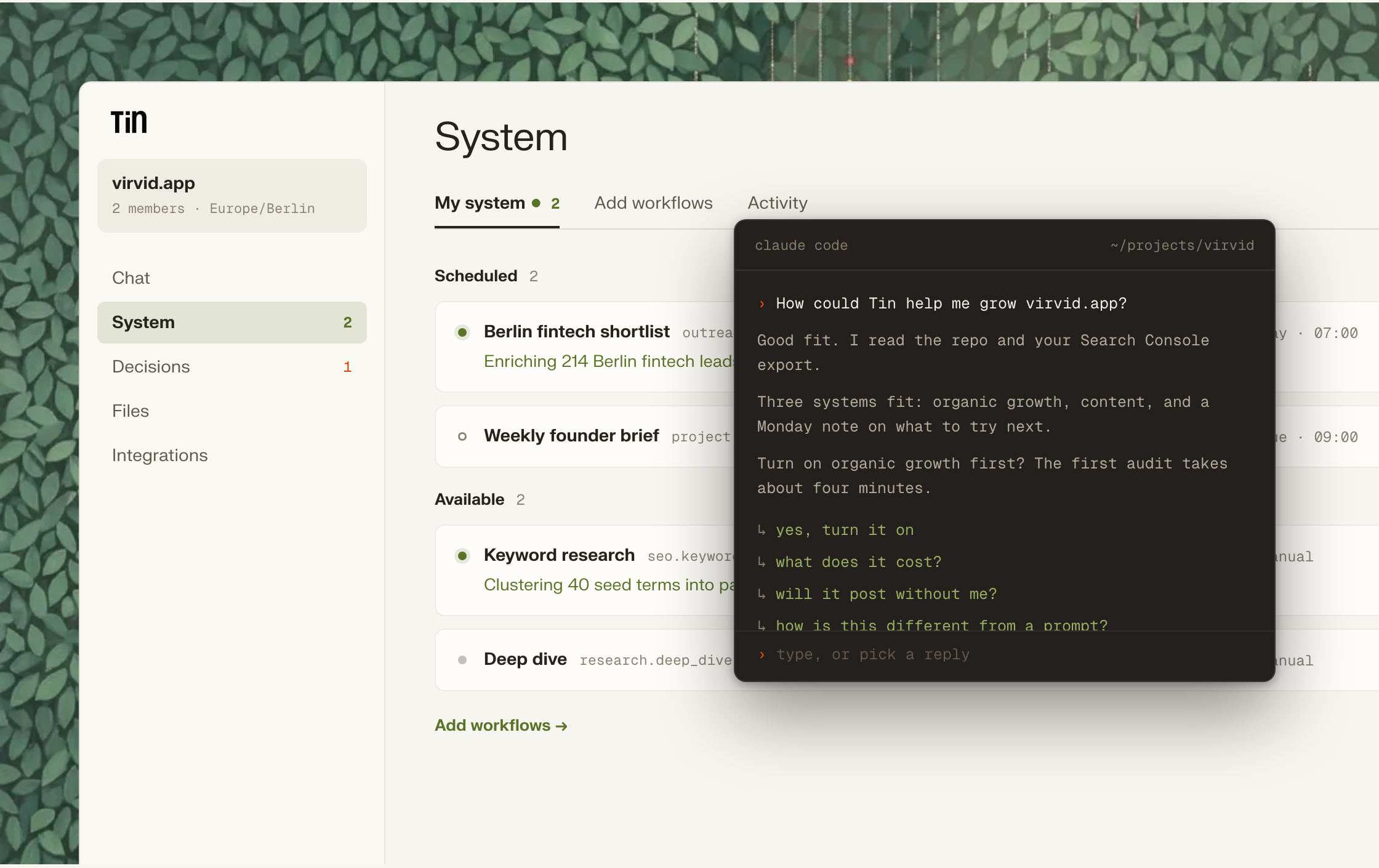
A keyword clustering tool takes a list of searches and groups phrases that one page could answer. Shared wording gives one basis for grouping. A person working in a spreadsheet can sort phrases by what the searcher wants. We compare overlap in Google's results and check the groups ourselves. The measure is the same for each method: can one page answer the whole group?
Tin's keyword plan supplies the research, and our team does the clustering. We choose a lead phrase, decide which page will answer the group and place it in the writing order. Close variants belong with that page when they ask for the same thing. This gives the content plan a clear job for each page before anyone starts drafting articles from the list.
When a keyword list is grouped only by shared words, similar-looking phrases can turn into the wrong set of pages.
Results overlap gives us evidence for keeping searches together or giving them different pages.
We use the researched inventory to compare what buyers are asking for, then assign each group to a page that can answer it.
We begin with the company's site, market and buyer context. Tin uses those inputs to research buyer searches and the keywords competitors rank for. It saves an inventory with evidence for the entries. We read that material before grouping the phrases, keeping the product and its buyers in view.
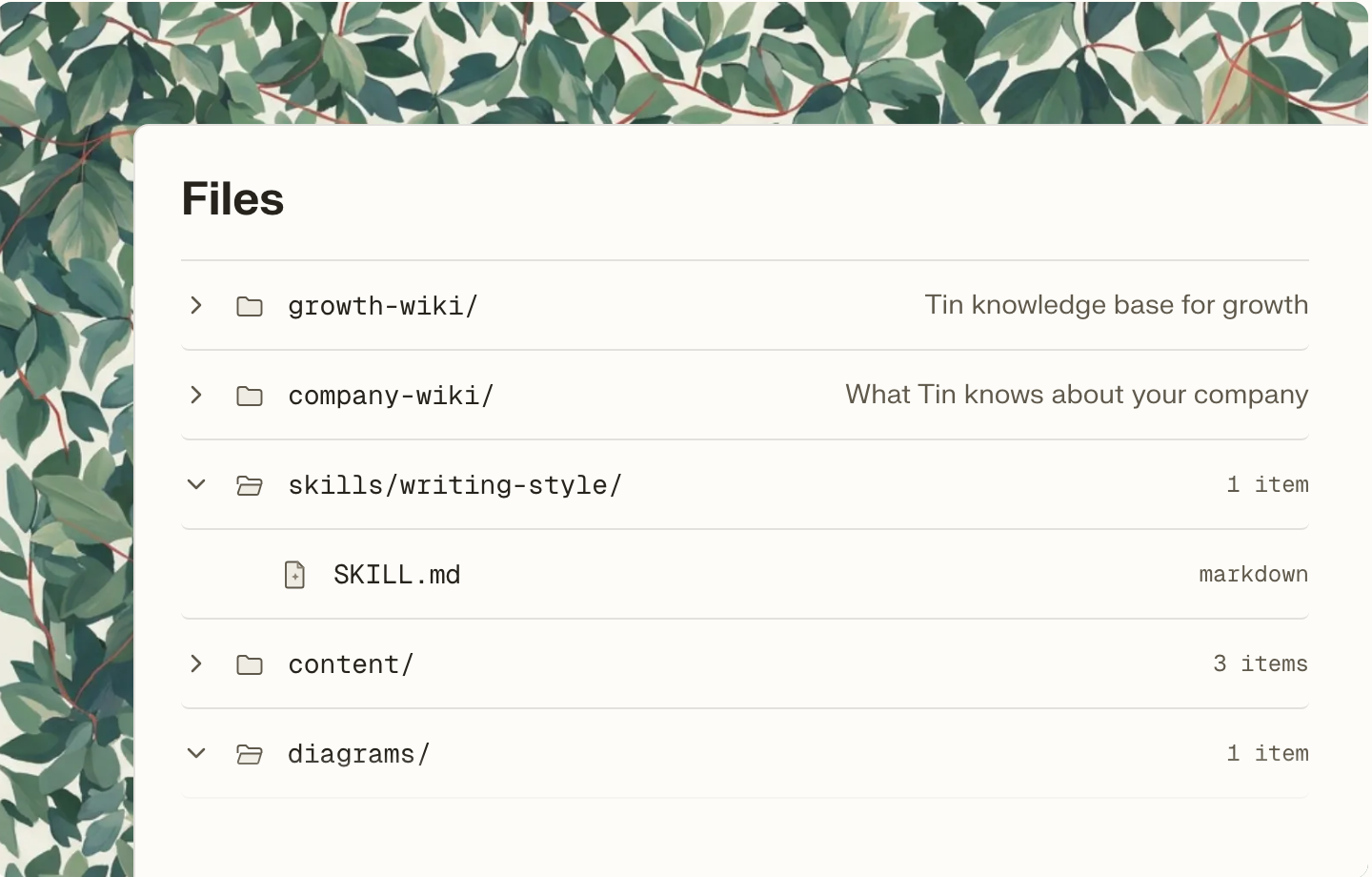
For a bounded set of searches, Tin fetches live Google results within the owner's spend cap. We compare the returned pages: do the searches lead to the same answers, or do the pages address different needs? That evidence helps us decide how the phrases should group, beyond their shared wording.
We group searches by the results they share, folding close variants into the same page when they ask for the same answer. We used this method for our own site's searches to avoid redundant pages. A person makes the grouping decision using the keyword job's collected evidence.
Search Console adds evidence from searches already bringing people to the site. On our own site, brand searches accounted for 130 of 134 clicks. Seeing that split helps us distinguish existing demand for the company from the buyer searches the content plan still needs to address.
We inspect merged volumes before choosing the phrase that leads each group. A large number attached to a combined term can conceal what a specific search earns on its own. Our team checks that distinction and selects the lead phrase before the group enters the content plan.
Use the content plan to give researched groups a destination and writing order. See planning workflows
Write the planned topic in the owner's voice from the project's evidence. See drafting workflows
Refresh a page when it already covers the search the group represents. See page refresh workflows
Read site findings that can inform the next round of page planning. See site audit workflows
Watch competing sites for developments worth considering in the next research run. See competitor watch workflows
Run research, planning and an article draft from the site's audit findings. See organic growth workflows
We can begin research with the public site and its market. Connecting Search Console adds the queries already bringing people to your pages.
The command connects Tin to your coding agent, which can use the product context to start the research.
codex mcp add tin --url https://app.tin.computer/mcpSearch Console supplies the site's current queries so we can consider them when assigning searches to pages.
Our people do the grouping and choose a page for each group before setting the writing order.
The workflow folder exposes the steps, data inputs and evaluations behind the keyword inventory.
Tin can run with your team's own keys and data in a local installation.
Edit the file to adapt the keyword workflow your coding agent runs.
Open source, Apache 2.0.
Let's discuss how your searches should group into pages. We set up the research, do the clustering and keep the content plan current as the writing moves forward.
The keyword plan returns a researched inventory for a particular product and market. Our team uses that inventory to group searches and assign pages. For someone who wants to browse and investigate keywords throughout the day, a keyword database is another way to do that research.
Tin fetches paid keyword and search-result data during the research job, within the cost ceiling set for that run. It can also read Search Console when connected. The saved inventory includes evidence for its entries. Our team uses that material to compare searches and check the proposed groups.
Yes, the research job accepts seed phrases, so an existing list can be used to start it. Competitor hosts are optional inputs as well. We then use the collected evidence to check that list against the product's market and decide which searches can be answered on the same page.
The keyword job returns the inventory. A separate content plan sets the topics and order, and the article workflow drafts from that plan. Our team handles the work between those steps, including checking the groups and reviewing the writing. An existing page can also be refreshed when it already answers the search.
Speak with the founders and engineers who research the searches and plan the pages. We can discuss the buyers you want to reach, the questions they search for and how those searches would group across your site.