
Explain product releases
Turn changes in the product into release posts readers can follow. See release workflows
Home/Platform/AI-Powered Content Creation Platform for Your Repo
Tin is an AI-powered content creation platform that uses your code and docs to write about the product you have built. We set it up, capture your voice and take on the weekly content work. Our people choose the articles, check the drafts and deliver the copy.
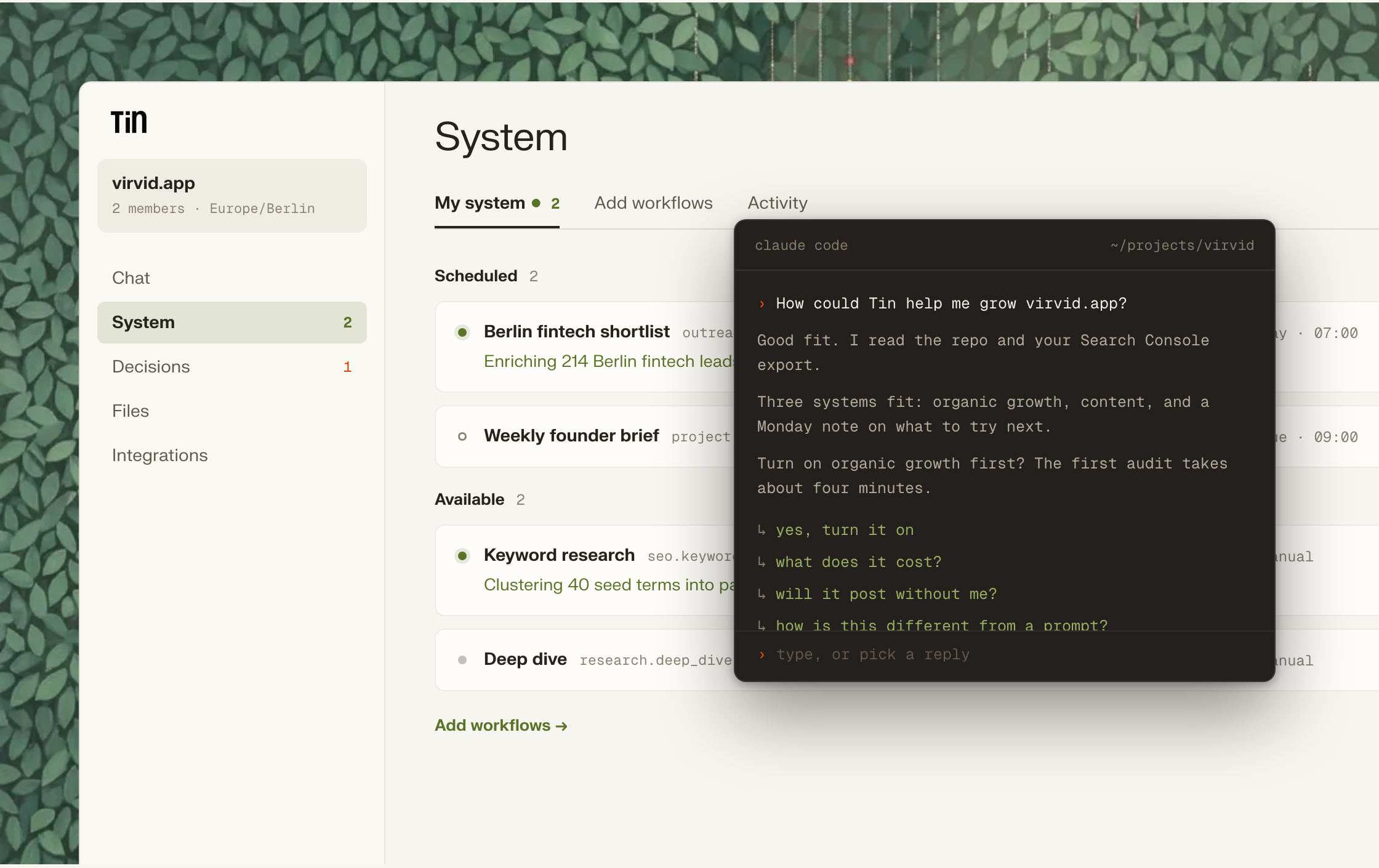
This kind of platform uses AI models to plan topics, draft articles and turn existing pieces into posts. When comparing content creation software, look at where the draft gets its product facts. Pasted notes put the facts in the prompt. A brand profile holds them inside the provider's app. Tin uses your repository and docs, so the agent can check descriptions against the product itself.
The useful test is whether a draft describes features that exist. A changelog records what changed; code and documentation explain what the product does. Those sources give the article something specific to say. We use them to plan and produce content, with a saved voice guide alongside the research. The draft and its supporting evidence stay available as files in the project.
When an AI writer starts from a prompt and a few notes, someone who knows the product has to correct its guesses.
Product files and a saved voice guide give the draft a more specific starting point.
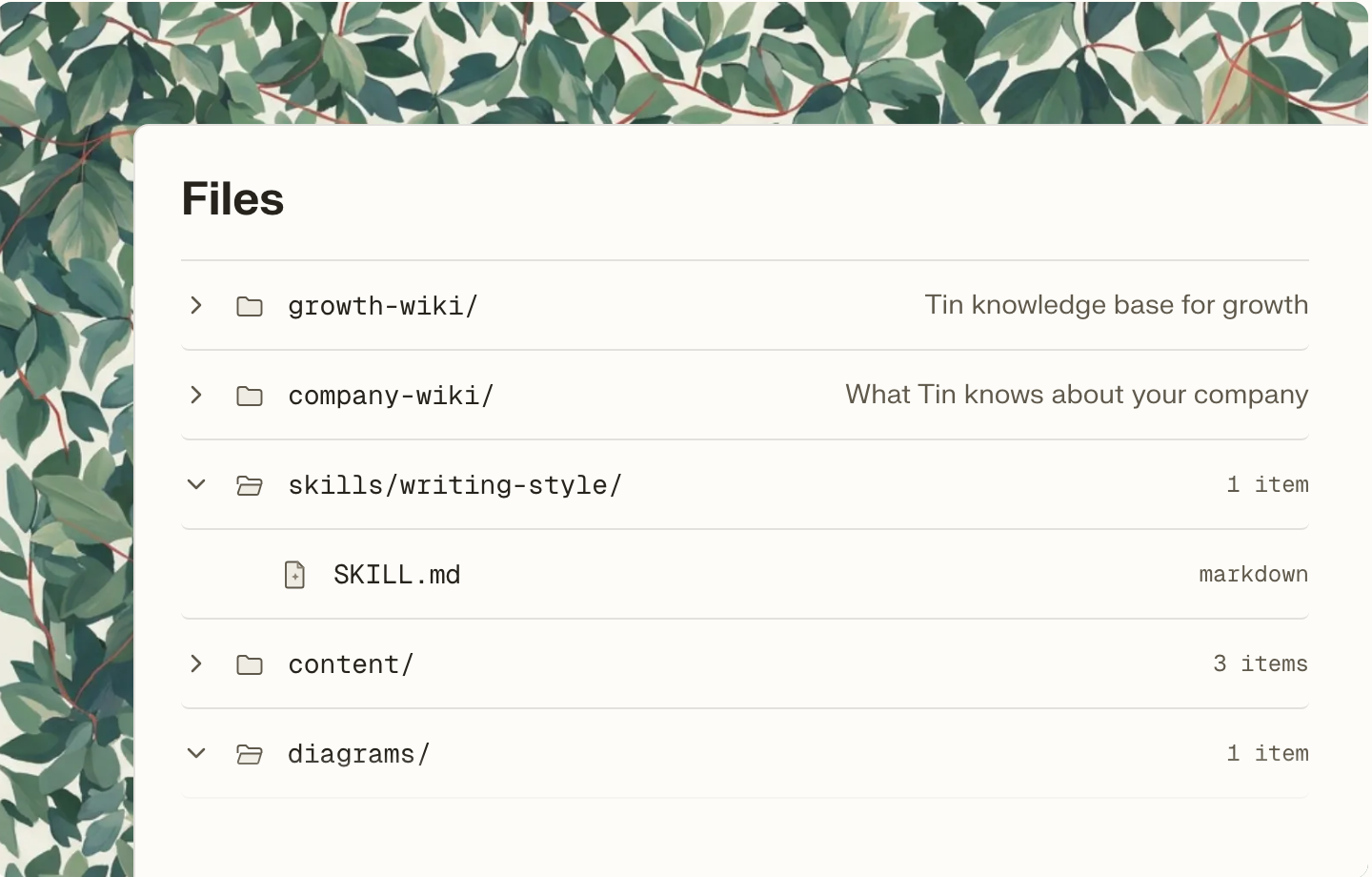
Open the files behind an article to see its writing guide, planned topic and sources before deciding what reaches the site.
We start with finished writing the owner has chosen, such as blog posts or essays. Tin reads those samples and writes a voice guide in the project. Each later draft loads the guide. If the description of the voice needs changing, it can be edited in that file.
Before drafting, Tin reads the content plan and selects the next eligible article. That plan is where we decide what to write about and in what order. The writing job follows those choices through production, using the company's chosen priorities to determine which topic it will address next.
A topic on the plan may already have an answer on the site. Tin checks for that before writing. It also checks whether there is enough evidence for the article. When either check stops the draft, it leaves a note explaining the reason, which we can use to revisit the topic.
The publishable article and its source evidence are kept separate. We read the copy on its own, then return to the evidence to check a product claim. Code, docs and the changelog help us establish what the feature does. Research notes stay out of the buyer's reading path.
The article workflow saves its draft for human review. You approve what ships. We review the writing and product descriptions before delivery, with the draft available to inspect in the project. Generating the article leaves the site unchanged, so writing and publishing remain separate actions.
Turn changes in the product into release posts readers can follow. See release workflows
Revisit published copy when the product or its supporting material changes. See refresh workflows
Carry search findings through research and planning into a first article draft. See article workflows
Prepare X and LinkedIn drafts from a piece already written about the product. See social workflows
Create diagrams to show the relationships an article needs to explain. See diagram workflows
Make a demo video from the product to accompany written explanations. See video workflows
We start with the material the product already supplies, then establish the voice and article plan the writing will follow.
Add Tin to the coding agent working with your repository, or open the project in the browser.
codex mcp add tin --url https://app.tin.computer/mcpCapture the voice from selected writing in the blog folder before the article drafts begin.
We plan the articles, check the drafts and deliver the content each week from the product's own material.
Read the text that directs voice capture and article drafting in the repository.
The content system can run on your machine with your own keys and data.
Change a workflow file to change how the next article is made.
Open source, Apache 2.0.
Let's discuss how we would set up content production around your repository, from the article plan to the drafts our team checks and delivers.
It saves an article draft in the project. Publishing is a separate part of the work, which we discuss around your site's setup. The drafting job does not merge code or publish to the blog. Its output is the copy and evidence we use to prepare the finished article.
Use finished pieces that sound like the articles you want to publish: blog posts, essays or longer notes. A few strong samples are enough to establish a reference. The guide follows the writing you select, so a large collection is less useful if it mixes styles you would not want repeated.
Yes, the guide is an editable project file. A change to that file becomes part of the guidance later drafts read. The team can refine the voice there as the founder's writing develops or the way you describe the product changes.
Tin prepares drafts for X and LinkedIn, including posts adapted from an article. It can also work from the weekly social plan and source notes. The output is a saved batch of drafts; the social drafting job does not post or schedule them on either network.
Meet the founders and engineers who set up Tin and run content production. We can discuss where the useful material sits in your repository and docs, and which articles would make sense to start with.