
Draft planned articles
Tin takes the next content-plan item and writes in the captured style. Explore article workflows
Home/Platform/AI Copywriting Tools That Write in Your Own Voice
Tin is one of the AI copywriting tools built for coding agents, capturing your voice from chosen writing before drafting articles and posts. We set up the writing workflows with you and review every draft before it reaches buyers.
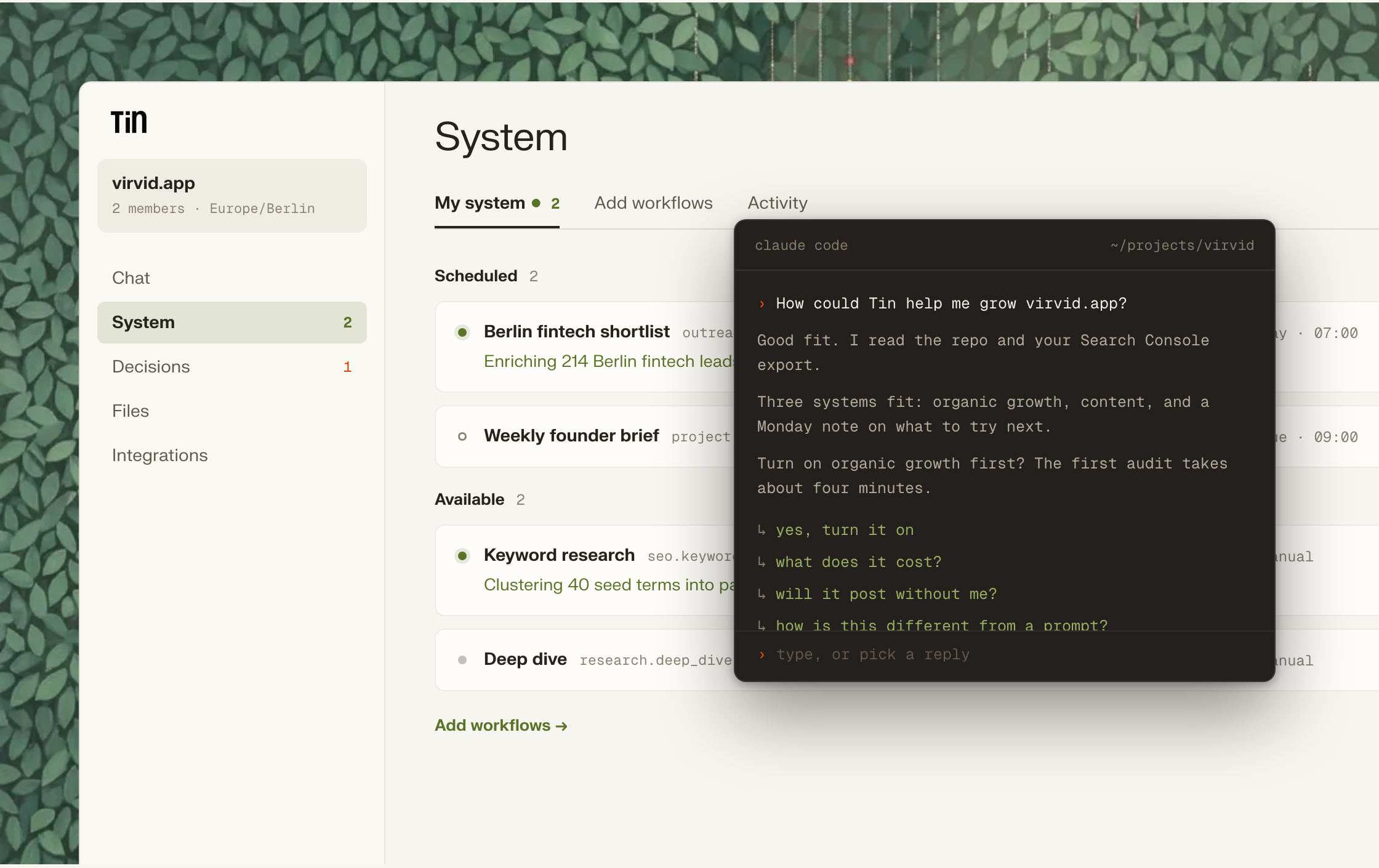
AI copywriting tools use a prompt or brief to draft articles, posts, page text and announcements. Some take their tone from each prompt; others keep a brand-voice setting in the app. Tin learns from the founder's writing, saves a voice guide as a file and loads it for later drafts. The question for each approach is how much rewriting it takes for the draft to sound like the founder.
A line about tone gives the draft little of the founder's own writing to follow. Correcting that voice can become the founder's next job.
Loading the same captured voice guide gives each draft the writing choices the founder has already settled.
Tin keeps the samples, guide and drafts in visible steps, so you can inspect how the voice was captured and decide what is used.
Tin begins by asking which writing it may read. It uses the samples you select, at the path you give, to capture the voice. Posts, notes and selected excerpts can provide that material. It does not scrape personal histories or assume your chat messages represent the way you write.
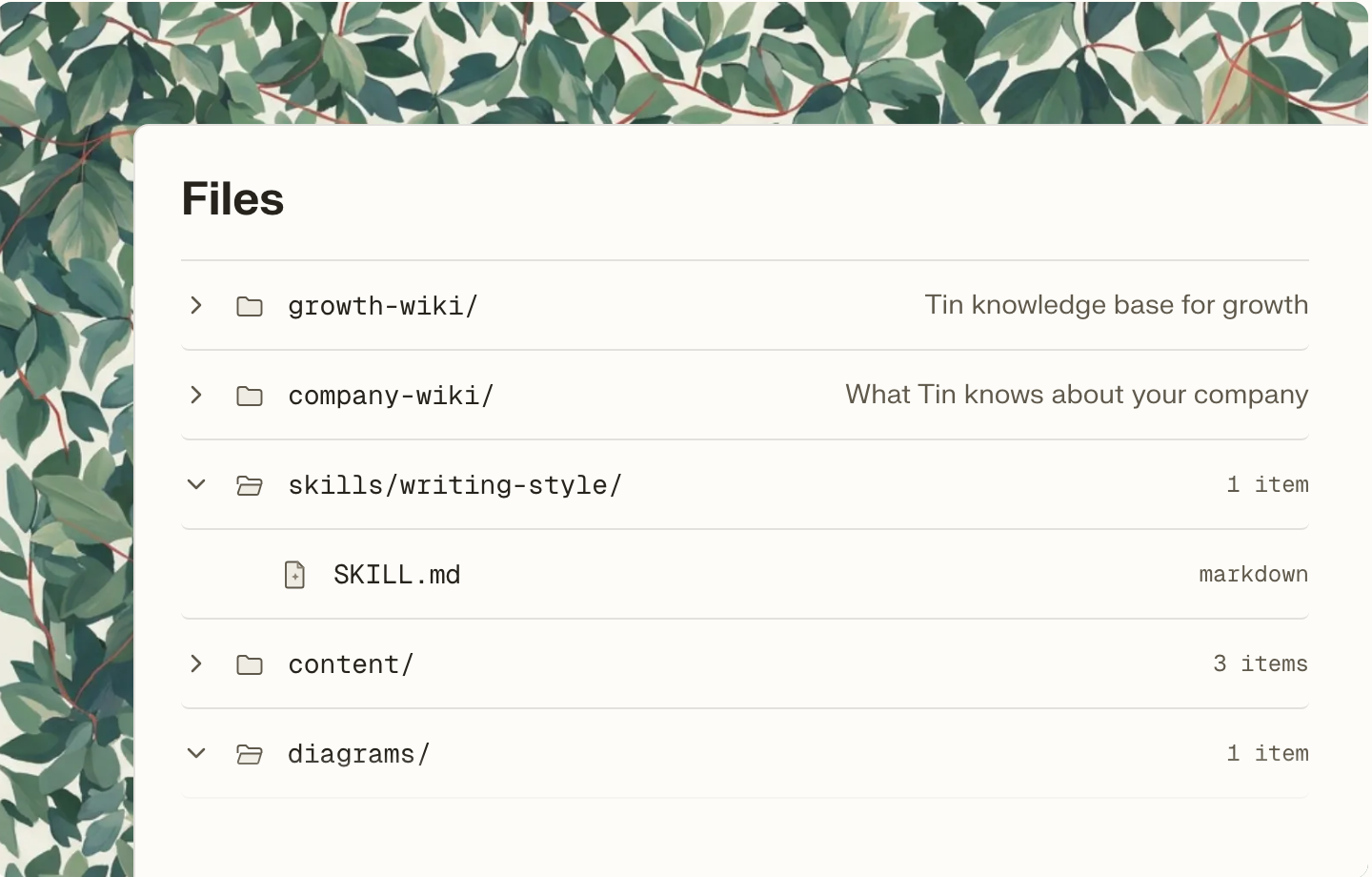
The voice guide sits among the project files, where you can open and edit it. Later drafting workflows read that file. If part of the guide misses how you write, change that part and the next draft loads the revision. The instruction stays with the project between writing sessions.
A small set of X posts gives Tin less writing to learn from. The proposed guide says where that limits its reading of your voice. Tin selects your own posts or supplied samples, skips reposts, quotes, duplicates and thin replies, and uses the raw posts only for extraction.
You see the proposed X guide in Decisions before it is used for drafts. The brand-capture workflow likewise proposes its documents for review. This is where you read what Tin inferred from the samples or website and decide whether that guidance describes the voice you want later writing to follow.
The article and social workflows hand back drafts you can read and edit. Repurposing an article produces two X drafts and two LinkedIn drafts, saved together for review. The workflow neither posts nor schedules them. You decide what to change before any of those words appear under your name.
Tin takes the next content-plan item and writes in the captured style. Explore article workflows
Release-post workflows turn product updates into copy for the owner to review. See release workflows
X drafts load the guide learned from the owner's own writing. Explore X workflows
Tin prepares X and LinkedIn drafts from an article for owner review. See social workflows
Page-refresh work gives the team a way to revisit copy already on the site. Explore page workflows
The brand-character workflow supports the identity used in the company's marketing work. See brand workflows
Essays give Tin longer passages to read; an X account gives it the founder's short posts. The website provides a starting point for the brand guide.
Connect Tin to Codex, then capture the style from the folder holding your essays or blog posts.
codex mcp add tin --url https://app.tin.computer/mcpTin reads up to 50 of your own public posts, or supplied samples, to propose a guide for X drafts.
Tin reads your existing site and proposes a short brand guide to carry its identity into later marketing work.
The repository contains the workflow text, including the steps that read writing samples.
The system can also run on your own machine with your own keys.
Editing the workflow file changes the instructions used to write the next voice guide.
Tin publishes its source under Apache 2.0, with the workflow files available to inspect.
We can capture the founder's voice with you, set up the drafting workflows in your environment and run the writing. Let's discuss which copy to start with and how our team would steer and review the drafts.
Only the samples you choose or add are used for writing-style capture. Tin does not search personal histories or take chat messages as your voice. The X workflow reads your own posts for extraction, then saves the guide without saving the raw posts to Files.
The samples can come from notes or selected excerpts you are happy to share. They can also be posts you supply directly. Where the X sample is small, its guide states the limits of what it could learn.
Content workflows load the captured writing-style guide. X drafts use a separate X guide learned from your own posts and saved at .agents/skills/x-writing-style/SKILL.md. That keeps the guidance for X writing in its own editable file.
A repository is optional for voice capture. Tin can read samples you add or a path you name; an open repository helps the coding agent locate writing already stored there. For brand capture, the public website is enough to start.
Talk with the founders and engineers who set up Tin and run the writing work. We can discuss which existing writing captures your company's voice and which articles, pages or draft posts would be useful to start with.