
Choose target searches
Research the searches each public page could answer with the keyword plan. Explore workflows
Home/SEO/SEO for Single Page Apps, Checked From Your Repo
Tin handles SEO for a single page app from the coding agent that already has your repository open. Our engineers can investigate the findings, make the changes and send your team a pull request to merge.
SEO for a single page app concerns what crawlers can read at each public route, including its title and description. Google Search Central separates crawling, rendering and indexing for JavaScript apps. Some bots cannot run JavaScript; server-side rendering or pre-rendering makes content available to them. When considering SPA and SEO, routing matters too: Google recommends the History API in place of fragments for loading distinct views. Read Google's JavaScript SEO guidance.
Browser developer tools let you check a route by hand. A hosted crawler examines public pages across the live site. With Tin, the audit runs from the coding agent already working in the repository, where it can compare findings with the app's code. The useful test is how directly a finding takes you to the line of code that causes the problem and needs changing.
When routes share an HTML shell and load their content in the browser, the page a crawler reads can differ from the one a buyer sees.
Checking the routes, their titles and their destinations can reveal these problems before buyers search for them.
Tin reads the public site; your coding agent can then investigate the findings in the repository. The report keeps the pages and evidence together for that work.
A run covers up to 100 public pages and checks them for technical SEO problems. Tin saves the findings and evidence in its report. An engineer can use that record to identify the affected pages before opening the code that controls their titles, tags or sitemap.
Keep the repository open in the coding agent while reading the audit. The agent knows the product and can examine the code for an affected route. A finding about a title or canonical tag then has a place to be investigated before the repair is written.
Alongside the page checks, Tin asks whether AI answers mention, cite or recommend the business. That reading is part of the audit report. Your team can examine it with the technical findings when deciding what the public site needs to explain about the company and its market.
Running an audit produces a report; it is a read-only check. Repairs come afterwards, when our engineers change the relevant code and prepare a pull request. Your team can inspect the proposed edits and merge them when it is ready to change the live app.
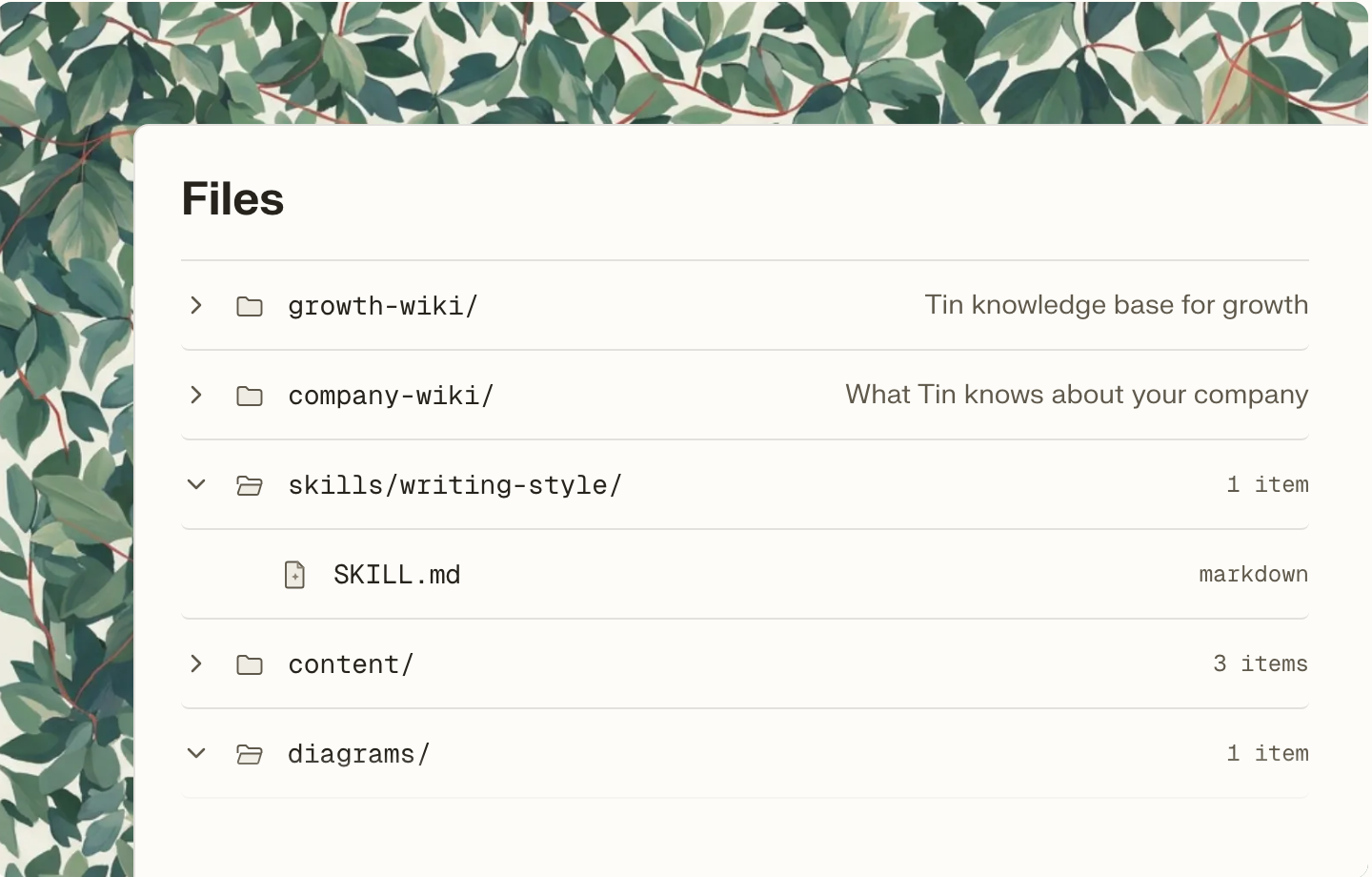
Project Files holds the report, the findings and the evidence behind them. An engineer can return to those files during a repair or pull request review. Later work also has a starting point: the content plan can read the audit run when choosing what to write.
Research the searches each public page could answer with the keyword plan. Explore workflows
Give the content plan an audit run to use as its starting material. Explore workflows
Use page refresh to work again on content that is already published. Explore workflows
Write pages around error messages people encounter when they use a product. Explore workflows
Inspect answers about the business through the separate AI visibility audit workflow. Explore workflows
Turn existing company mentions into requests for a link to the site. Explore workflows
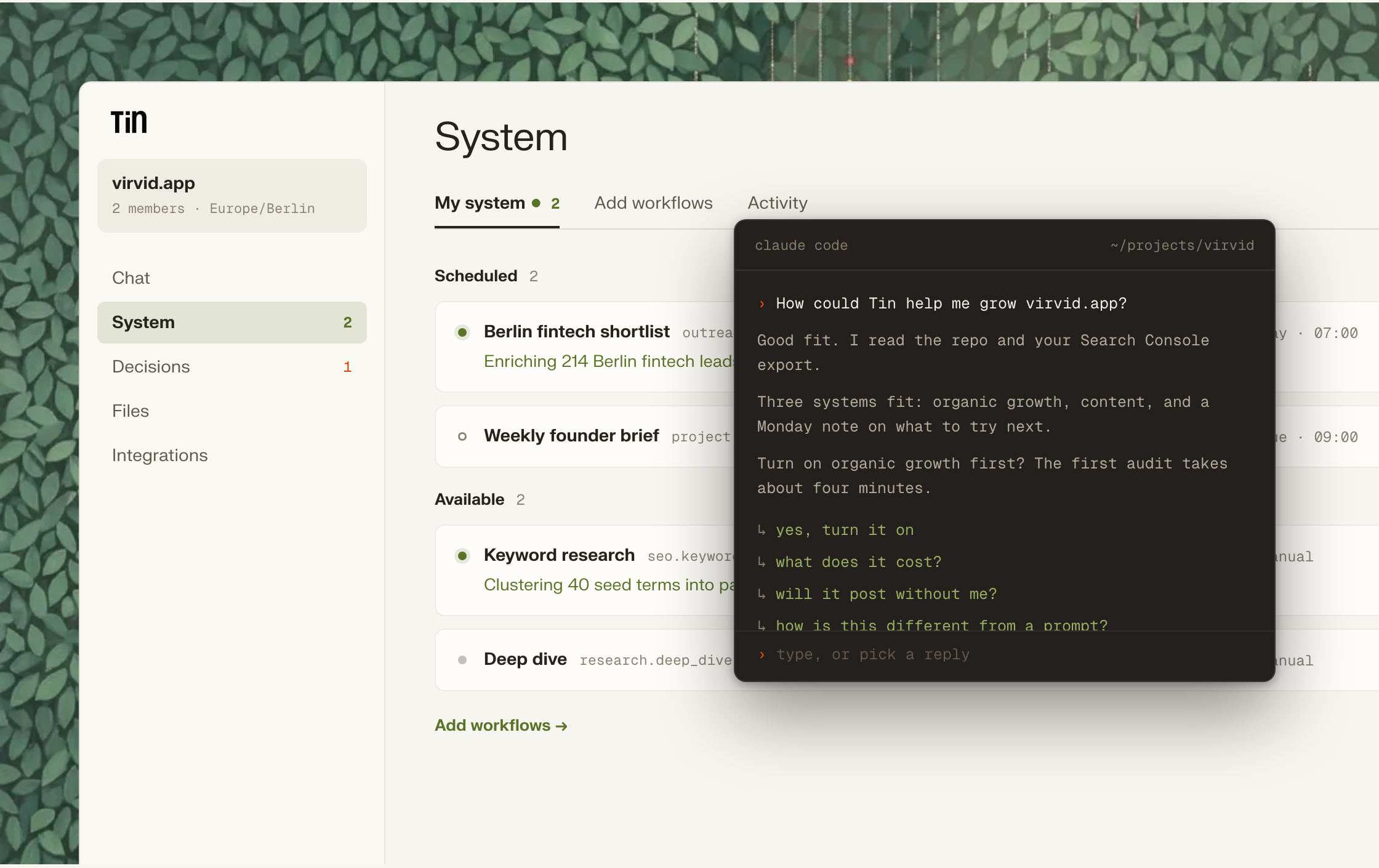
Ask for an audit of the public site in the market you want to reach. You can discuss its findings with the agent in the same session.
Add Tin with the command, then ask for the US-market organic audit and have the agent explain its top findings.
codex mcp add tin --url https://app.tin.computer/mcpThe outward-facing marketing site is the place to begin, with the repository for the pages buyers will see.
The audit runs on the public site without a GitHub connection, and engineers use the repository when the repairs begin.
The technical SEO audit is a text file in the repo.
Change what the audit checks in its file and send the edit back.
The system can run on a machine your team controls, using your own keys.
Open source, Apache 2.0.
Let's discuss the routes that need work and where our engineers could help. We handle titles, canonical tags, sitemaps and indexing fixes, with the changes delivered for your team to review and merge.
Yes, Google processes JavaScript apps through crawling, rendering and indexing, as Google Search Central explains. Other bots may lack that rendering ability. Server-side rendering or pre-rendering gives those crawlers content to read, so the audit needs to examine what the app makes available at each public route.
The choice depends on what is available to crawlers at the routes that matter. We investigate the audit findings before choosing a rendering change for an affected page. The review also considers titles, routing, canonical tags and the sitemap, so the repair addresses the problem found on that route.
The audit reads public pages and writes its report in the project; the live site stays as it is. Our engineers can use the findings to prepare repairs in the repository afterwards. Those edits arrive in a pull request for your team to inspect and merge.
Our engineers can change titles and meta descriptions across the routes in the repository. The coding agent can help apply the edits, which our people review before buyers see the copy. We send the changes as a pull request and your team controls the merge.
Talk with the founders and engineers behind Tin about your app's public routes. We can discuss what the first audit should examine, how the findings relate to the code and where our engineers could help with repairs.