
Refresh a relevant page
Rework the page an audit finding points to using the project's context. See page refresh work
Home/AI search/Generative Engine Optimization Tools for B2B
Among generative engine optimization tools, Tin asks buyer questions that omit your product's name and records whether answers mention, cite or recommend it. Findings go into your project as AI_VISIBILITY.md. Our team runs the fuller check, changes the pages and asks the questions again.
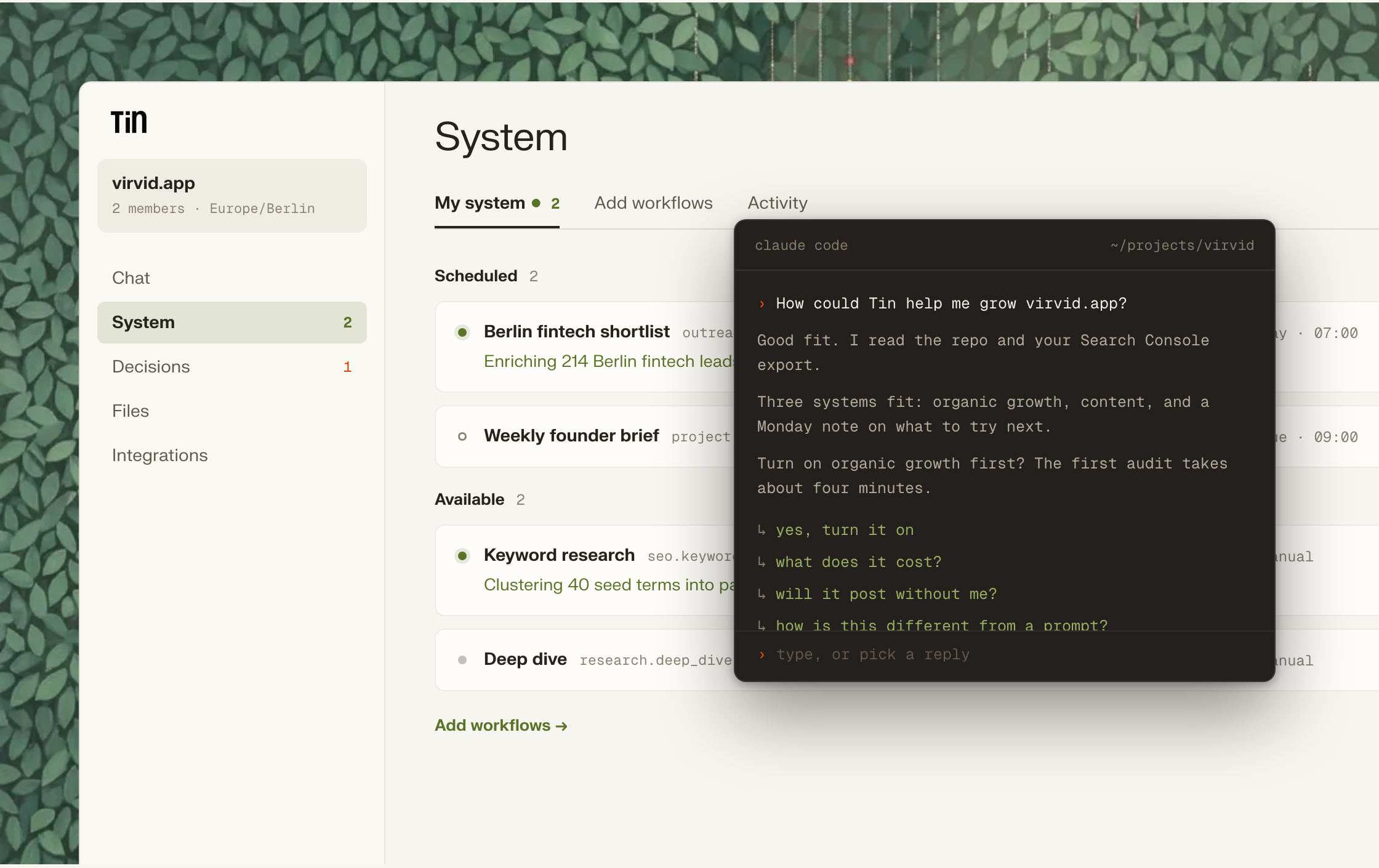
Generative engine optimization tools ask AI assistants buyer questions and record whether a company appears in their answers. They check mentions, citations and recommendations, and show which sources those answers draw on. GEO tools help a team examine what buyers hear from assistants such as ChatGPT, Perplexity and Gemini. After reading the answers, someone needs to investigate the gaps and work on the pages the assistants use.
Peec AI tracks prompts daily and compares competitors; Profound serves enterprise brand teams monitoring AI answers. Semrush AI Visibility Toolkit puts AI tracking inside an SEO suite. Tin writes audit findings into the project for a coding agent and our people to act on. The full comparison covers the options in more detail. The choice comes down to who changes those pages once the finding has arrived.
The team checks its mention score each week, but the same pages remain in place for assistants to read.
A finding for each question gives the coding agent and our team somewhere to begin.
Tin records the questions and how the answers describe your company. The coding agent can read that record when it starts work on the page.
Name a product, site or brand as the audit's target. Tin writes five buyer questions that leave that name out, using the way a buyer would ask. That lets the check examine an ordinary buying question: someone asking for help who has yet to choose a product.
The audit records whether each answer mentions, cites or recommends the target. Those are different observations: a mention names the company, a citation points to a source, and a recommendation presents it as an option. Open the file and read the finding against each buyer question to see which of those things happened.
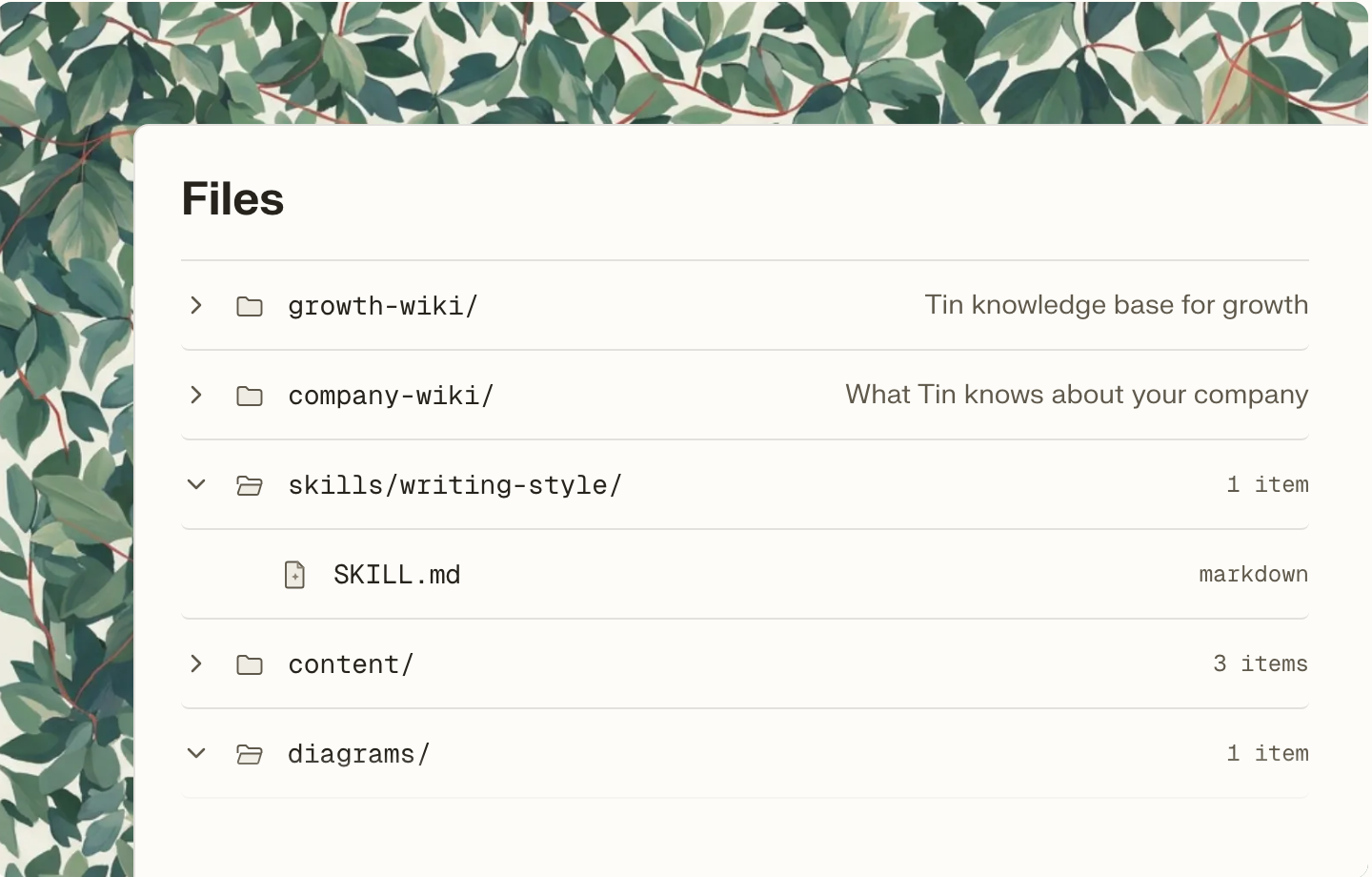
Tin publishes AI_VISIBILITY.md in the project, where the coding agent can read it alongside the site's files. Ask the agent to read the finding before refreshing the relevant page. The file stays in git, with its changes recorded in history.
The SEO and AI visibility audit examines up to 100 public pages and saves technical findings with their evidence. Our service also checks schema, llms.txt and markdown copies. The people working on the pages can then examine both how the site is reached and what its files give an assistant to read.
Our team asks the buyer questions again after making changes to the pages. We read the new answers beside the earlier findings to see what changed. Proposed changes reach the owner as a pull request or a one-click publish, with the decision kept beside the draft before it goes live.
Rework the page an audit finding points to using the project's context. See page refresh work
Prepare an article in the owner's voice for questions existing pages leave unanswered. See article drafting
Prepare backlink requests where another page already names the company without linking. See backlink requests
Work on the company information buyers and assistants find in relevant marketplaces. See marketplace work
Draft replies for threads where the company's experience can answer the question. See community replies
Bring news from competing companies into the project through the competitor watch workflow. See competitor watch
Run the check from your coding agent, then decide whether your team or ours should take on the findings.
Connect Tin with the command below and ask the coding agent to audit the AI answers for your company's product.
codex mcp add tin --url https://app.tin.computer/mcpYour coding agent reads AI_VISIBILITY.md and drafts changes to the pages identified by the findings, ready for your team's review.
We run the 30-question check across ChatGPT, Perplexity and Gemini, make the page changes and retest the answers.
How the AI visibility check works is written in the repo as text.
Ask the assistants with your own keys and keep the answers in your own files.
Change the questions or engines in the file and send it back.
Open source, Apache 2.0.
We can discuss the 30-question check, the pages and third-party listings it points to, and who will change them. Our team handles the page work, schema, llms.txt, markdown copies and retesting.
The audit gives a focused read on five buyer questions that leave out the product's name. The service examines 30 questions across ChatGPT, Perplexity and Gemini. Our people use that fuller check to investigate the pages and sources behind the answers, make changes and test again afterwards.
The audit is read only: it asks the questions and publishes the findings to your project. Changes to the website happen in the work that follows. Those findings give your coding agent or our people a record to use when preparing the page drafts and code changes.
SEO works on appearing in search results; GEO works on being named and cited in AI answers. The work overlaps because assistants often search the web and read pages before answering. The GEO and SEO guide explains how search discovery connects to the assistant's later choice.
Yes, a monitoring dashboard can keep tracking prompts over time while Tin's audit puts findings into the project for follow-up. Your team can continue reading the trends and use the audit to inform page work. Our AI visibility comparison explains the kinds of tools available.
Talk with the founders and engineers who would investigate your company's AI search presence. We can talk about the questions buyers ask and read the answers together, then discuss what those answers suggest changing on the site.