
Check checkout trust
Fixed rules produce a PASS, FAIL or UNVERIFIED verdict and rank the fixes. Explore checkout checks
Home/Platform/Claude Code for product managers
Tin adds signup walkthroughs, feature maps, audits and release drafts to Claude Code for product managers. We set the workflows up on your product's repository and run them, from a stranger's signup to checking what shipped.
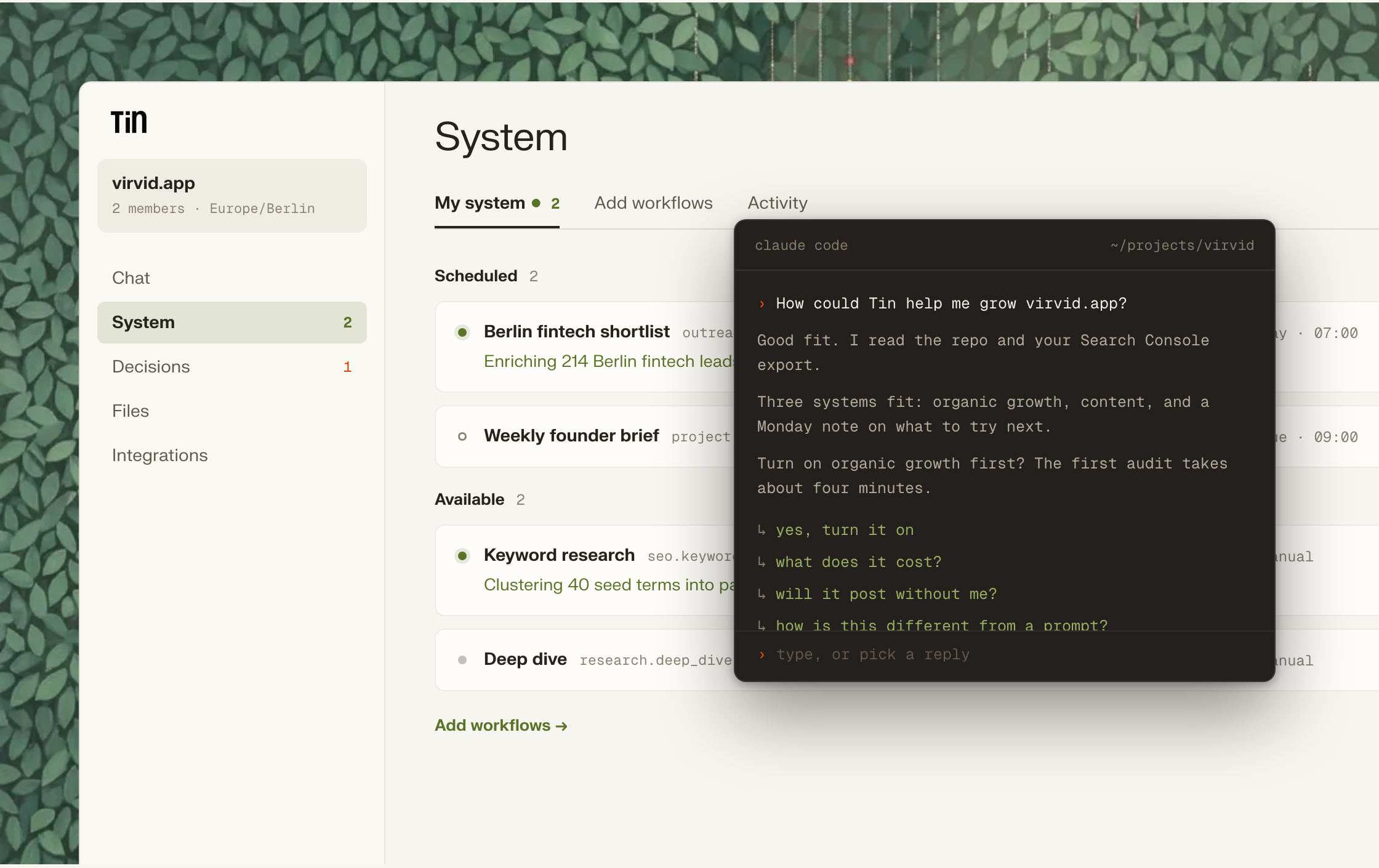
Claude Code lets a product manager ask how a feature works by reading the code behind it. Claude Code Docs describes a tool that reads code, edits files, runs commands and connects development tools. Anthropic reports that teams use it to understand codebases and that its Product Design team maps error states, logic flows and system statuses. For a product manager, that means questions about feature behavior, release changes and where a plan limit sits.
Ask questions about the code during a session when you need to understand a feature. For recurring checks, Claude Code Docs describes shareable skills and scheduled tasks. With Tin, Claude Code runs workflows that use the live product in a real browser with a Tin-owned account and save findings in project memory. The useful test is whether the answer comes from the product as a new user meets it and stays available for the next run.
The team has the code, the docs and accounts that are already logged in. A new user still has to get past the verification email and reach a useful feature.
An agent that uses the product as a new user leaves a record of the gaps the team needs to address.
Tin reads the repository, uses the live product and saves the findings in files Claude can read. Each check adds a different view of what buyers encounter.
The code map reads the connected GitHub repository and lists the surfaces users can reach, including their plans, gating and integrations. Each entry lives in wiki/INDEX.md and cites the relevant source file and line. This read-only map gives the team a way to trace a product question back to the code.
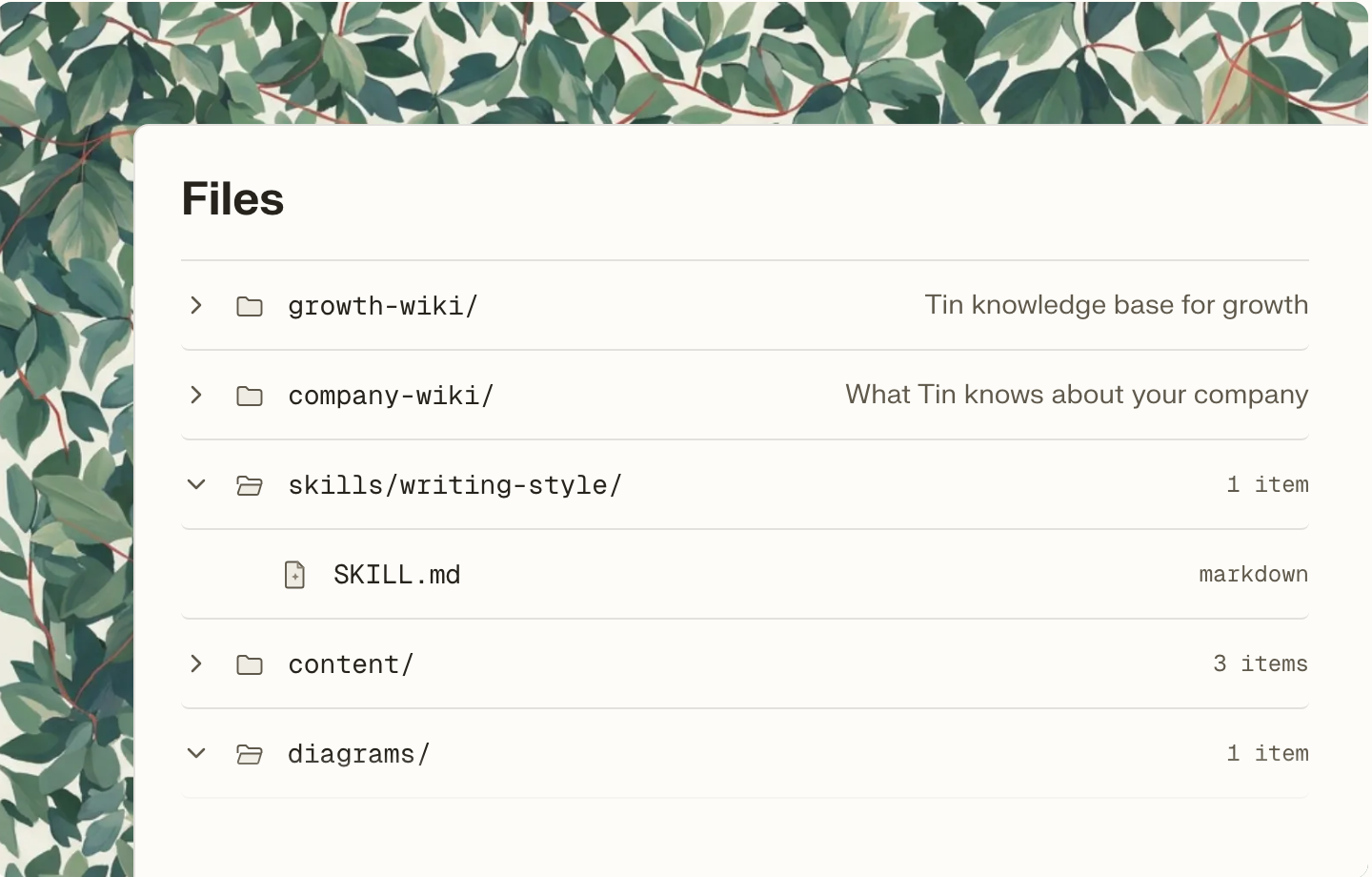
The feature map signs in with a Tin-owned account and uses the product in a real browser. It reconciles what happened with the code map and records evidence for each feature. When the docs promise something it cannot find, the map notes the disagreement for the team.
The signup walkthrough arrives as a stranger, creates a Tin-owned test account and verifies the email. It continues toward first activation and records every break along the way. The dated report shows what failed and where, so Claude can read the findings with your repository open.
The feature audit exercises each feature in the map as a user. It records what works, what breaks and what could improve, with steps to reproduce the findings. A scope input can focus the check on a product area. The audit reports its findings without changing the product.
Release posts turn the changelog into drafts for X, LinkedIn, Reddit and a newsletter email. Each draft covers only changes included in that release. The workflow saves the text as drafts for the team to read; it does not post, send or publish them.
Fixed rules produce a PASS, FAIL or UNVERIFIED verdict and rank the fixes. Explore checkout checks
A PostHog brief follows activation and includes the query behind each number. Explore analytics briefs
What people say about the product supplies material for a copy fix. Explore feedback workflows
Pricing and changelog watches record changes around the product for the team's review. Explore market watches
Generate DESIGN.md from the repository so design context has a file to read. Explore design capture
The weekly brief gathers what moved and proposes useful next steps from the record. Explore weekly briefs
A public signup is enough for the walkthrough; the code map starts from GitHub, and the feature audit uses the feature map. We can run those checks for your team.
Add Tin to Claude Code, then ask for a signup walkthrough using the public URL, without supplying account credentials.
claude mcp add --transport http tin https://app.tin.computer/mcpConnect GitHub for the code map, then use that context in the feature map before running the audit.
We run the product checks and use the reported breaks and gaps to guide work on the website and funnel.
The signup walkthrough and onboarding workflows are text files in the repo.
Run them from Claude Code on your machine, with your own keys and data.
Change a step in the file and send it back for review.
Open source, Apache 2.0.
We can set the product checks up on your repository and run them as part of the growth work. Findings guide website fixes, forms, calls to action and funnel checks. Our people review the work before it reaches buyers, and the founder approves the important steps.
Keep your end-to-end tests alongside these checks. The signup walkthrough is an exploratory pass by an AI tester encountering the product for the first time. It follows the experience from a stranger's arrival through activation and records breaks, giving the team findings from that fresh visit to investigate.
Tin uses its own test account for the signup walkthrough, feature map and feature audit. Those checks exercise the product as a user with that identity. The checkout trust check reads public pages through GET requests only; it neither signs in nor submits forms.
The code map stores descriptions of product surfaces and citations to files and lines, rather than a copy of the source. It reads the connected repository without changing it. Its output goes into wiki/INDEX.md, where later checks can read how features, plans and integrations relate to the code.
Start with the code map if you have a GitHub connection. The signup walkthrough needs a public signup, while the feature map needs a reachable product and uses a Tin-owned account. A code map is recommended before that feature map; the feature audit then uses the mapped features as its scope.
Discuss your product with the founders and engineers who set Tin up and run the checks. We can talk through where a fresh user might struggle, which checks to begin with and which findings to act on.