
Check AI answers
Run an AI visibility audit to examine how answers describe and recommend the business. Find visibility workflows
Home/Platform/ChatGPT for SEO, Grounded in Your Site's Own Data
Tin connects ChatGPT for SEO to Search Console and Google results so the research starts with your site's searches. We set up the connection and run the weekly SEO jobs. Our people use the findings to choose the page work and check what gets produced.
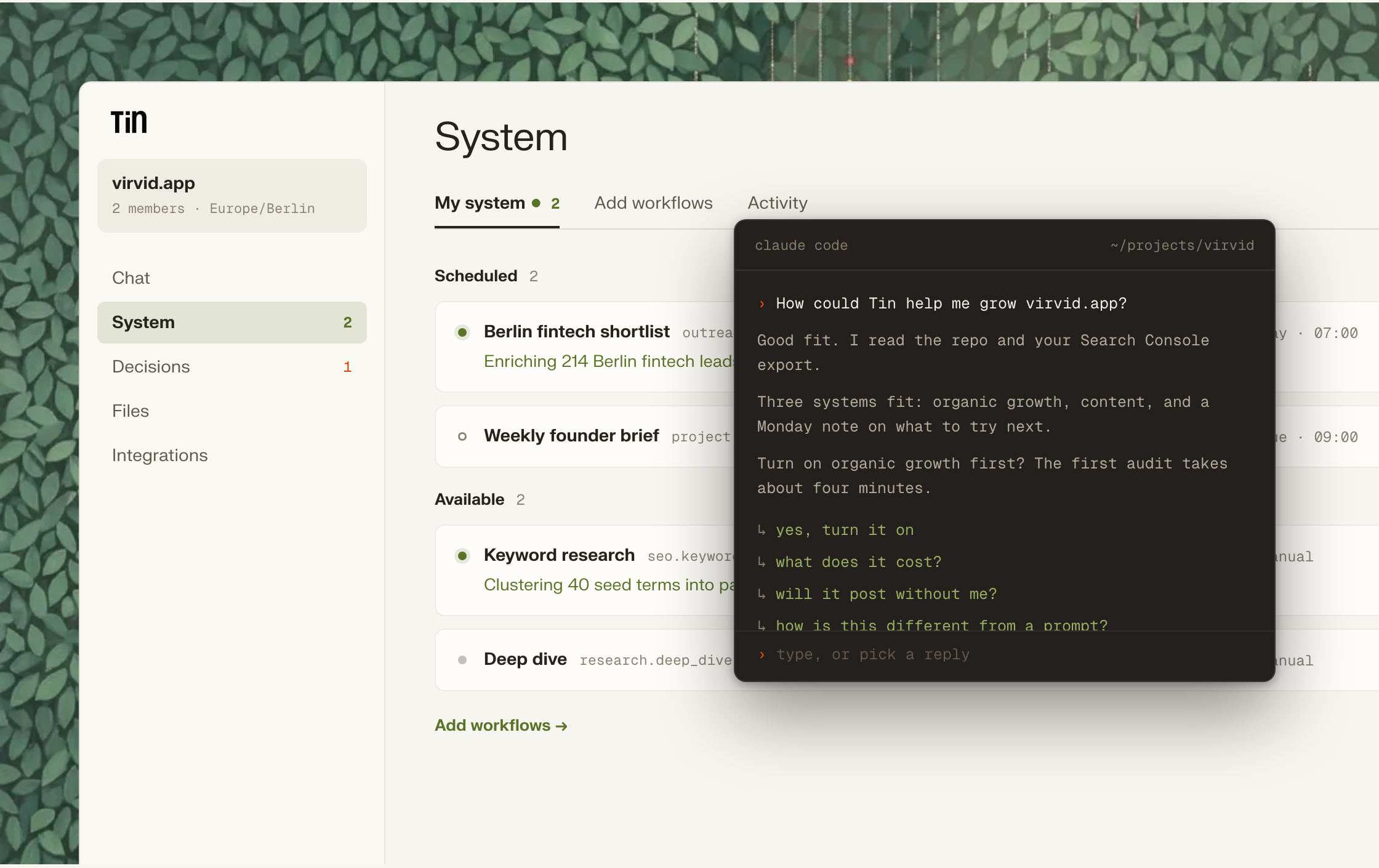
Founders use ChatGPT for keyword ideas, outlines, titles and audit checklists. They can ask in a chat with no site data, paste exports from other tools, or connect the site's search data through Tin. The question to ask of each route is how well the advice fits this particular site. Tin supplies defined SEO jobs and saves their findings with the project.
A ChatGPT SEO tool is useful when it helps answer a question about the pages you own. Which searches reach them already? What do competing pages cover? Tin's research uses live data to investigate those questions, following a tested sequence and saving the results. We read that evidence to decide what to work on, and later jobs can return to the same files.
Asked what to do about SEO with no site data attached, a model can recommend work before it knows which pages need attention.
We connect the data and keep the research so later advice can account for what the site already shows.
Tin reads the product context, audits the pages and brings search data into the project. We use that record to decide what happens next.
ChatGPT writes buyer context from what it already knows about the product. That context gives keyword research a description of who might buy and what they need. We use it alongside the site's data, so the research begins with the company's market and the problems its product addresses.
Tin reads up to 100 public pages to check technical SEO and whether AI answers mention, cite or recommend the business. Findings and supporting evidence are saved in the project. The audit changes no pages. We consider its record before deciding which site work to undertake.
We can read the queries already reaching your site in Search Console. For potential topics, the keyword job fetches a bounded sample of live Google results within the owner's spend cap. Those results show the pages a buyer would encounter, helping us assess a search alongside the site's existing demand.
We develop ideas and score them against rubrics before writing the growth plan. The selected work forms a single storyline, with reasons for the order in which it should happen. A proposed SEO task is considered in that plan, alongside the product context and the findings gathered from the site.
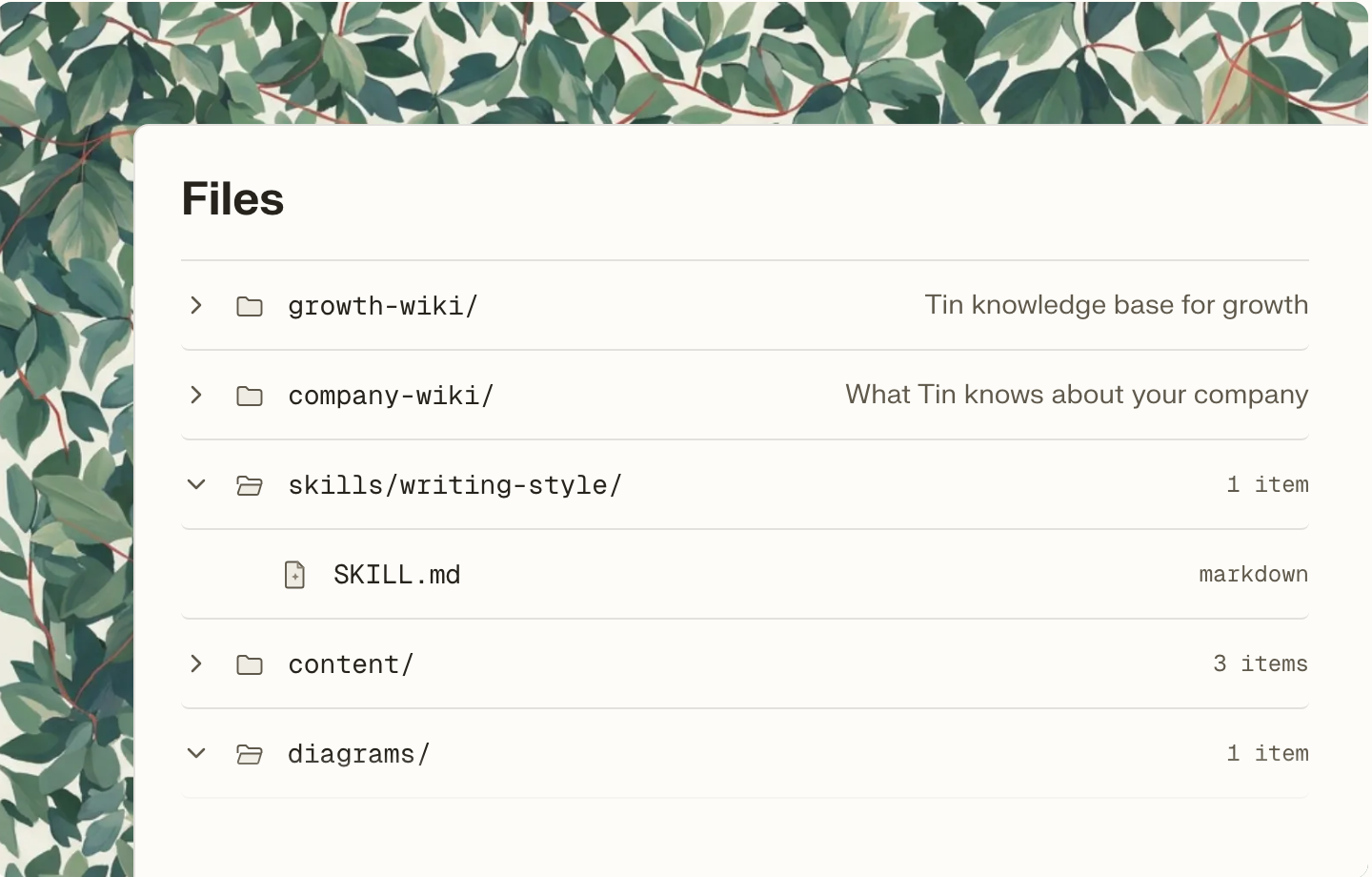
Research, plans and drafts remain in project files with history, so a later job can read what came before. Drafts wait for review, and our people check the work before it reaches buyers. The saved record lets us discuss a recommendation alongside the material that led to it.
Run an AI visibility audit to examine how answers describe and recommend the business. Find visibility workflows
Use researched topics to set the content plan that guides later writing. Find content planning
Save a guide from selected samples for the article drafts to follow. Find style capture
Turn a planned topic into an article grounded in the product's material. Find article workflows
Develop a growth plan using the product and the company's working constraints. Find growth planning
Bring the week's findings into a report that helps choose subsequent work. Find reporting workflows
The custom connector gives ChatGPT access to Tin. Your ChatGPT plan determines whether that route is available; the same projects also open in Tin's browser app.
Add the address below as a custom connector in settings, then sign in to Tin; developer mode may be needed.
The browser app opens the project directly, and the command below connects Codex to it through MCP.
codex mcp add tin --url https://app.tin.computer/mcpOur people handle the connection and the weekly research, then plan and produce the page work from the findings.
Each workflow folder holds the steps, data inputs and evaluations behind the action ChatGPT requests.
The Tin system can use your keys and data while running on your team's machine.
Changing a workflow file changes the job available to the connected agent.
Open source, Apache 2.0.
We can discuss connecting your site's data and taking on the SEO work it points to. Our people handle the recurring research and page work, with findings saved for the team.
That is AI search, which we run as a separate growth experiment. We examine how ChatGPT, Perplexity and Gemini answer your buyers' questions, then improve what they find about the company. This page covers using ChatGPT to do SEO work on your site. Read about AI search.
Tin supports site changes through GitHub pull requests that the owner merges. The audit is a different job: it reads public pages and saves findings without changing the site. We use the research to choose subsequent work, keeping the audit's findings distinct from the edits proposed for the repository.
Yes, Claude Code, Codex and Cursor can call Tin through MCP. They use the same projects and workflows, with the coding agent working from the repository it already has open. That gives a technical team another way to continue the site's research and page work from the saved files.
Start with the SEO and AI visibility audit. It examines the public site for technical problems and checks whether AI answers recommend the business. Ask for the findings and their evidence, so the discussion about what to do next begins with the pages and answers the audit read.
Speak to the founders and engineers who connect the data and run the SEO work. We can discuss what your site earns from search today, what the pages reveal and which work that evidence suggests trying next.